







What's Happening?
The Trump administration is facing bipartisan criticism following the announcement of a negotiated settlement with Iran, which includes significant concessions. The agreement, known as a memorandum of understanding, involves the release of billions of dollars
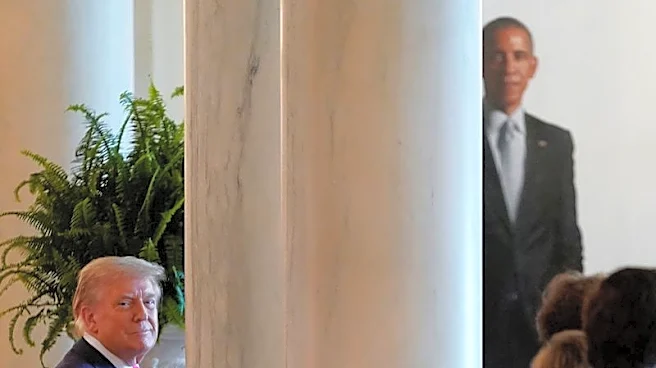
in Iranian assets and the lifting of sanctions on Iranian oil. Additionally, the U.S. has agreed to end a naval blockade of Iranian ports and establish a $300 billion fund for Iran's reconstruction. Critics, including Republican senators, argue that these concessions represent a reversal of U.S. policy and undermine efforts to curb Iran's nuclear ambitions. The deal has been compared unfavorably to the Obama-era Joint Comprehensive Plan of Action, with concerns that it lacks clarity on Iran's nuclear program.
Why It's Important?
The agreement marks a significant shift in U.S. foreign policy towards Iran, potentially impacting regional stability and U.S. relations with allies. The concessions could embolden Iran, which has been viewed as a major security threat due to its support for terrorism and nuclear ambitions. The deal's critics argue that it undermines U.S. leverage and could lead to further instability in the Middle East. The economic implications are also significant, as the lifting of sanctions could boost Iran's economy and alter global oil markets. The agreement has sparked debate over the effectiveness of U.S. foreign policy and the administration's approach to international diplomacy.
What's Next?
The agreement's implementation will be closely monitored, with potential challenges arising from Iran's compliance and the reaction of U.S. allies. The deal's impact on U.S.-Iran relations and regional dynamics will be scrutinized, particularly regarding Iran's nuclear program and its role in the Middle East. The U.S. administration may face continued domestic and international pressure to address concerns about the deal's terms and its broader foreign policy strategy.