
What's Happening?
Researchers at Sanford Burnham Prebys Medical Discovery Institute and Duke-NUS Medical School have demonstrated that stem cell-derived neurons can integrate into existing brain circuits and restore function
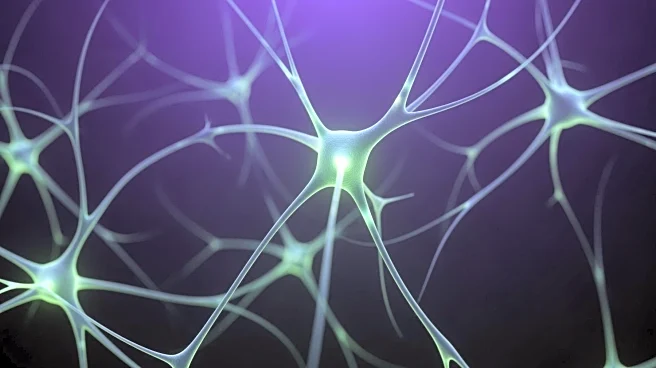
in mice. The study, published in Cell Stem Cell, showed that transplanted neurons matured and formed connections with the nervous system, guided by intrinsic codes for navigation. This research, led by Dr. Su-Chun Zhang, highlights a promising strategy for treating neurological diseases through neural transplantation. The study found that different types of transplanted neurons could find their specific targets in the brain, even in a mature and complex environment.
Why It's Important?
This research is crucial as it addresses the challenge of integrating transplanted neurons into existing brain circuits, a major hurdle in regenerative medicine. The ability of these neurons to form specific connections could lead to effective treatments for stroke and other neurological conditions. This approach could potentially restore lost functions such as memory retention and motor skills, offering hope to millions affected by brain injuries. The study's findings could pave the way for more predictable and effective neural transplantation therapies, significantly impacting the field of regenerative medicine.
What's Next?
The research team plans to further explore the navigational abilities of these neurons and their potential for targeted circuit reconstruction. By understanding the genetic codes that guide neuron integration, scientists aim to develop more precise therapies for brain injuries. Future studies will focus on optimizing the survival and integration of transplanted neurons in hostile environments, such as those created by stroke. This research could lead to new cell therapy strategies that effectively repair and reconstruct damaged neural circuits, offering new hope for patients with neurological conditions.