




What's Happening?
California's Board of Forestry and Fire Protection has unanimously approved new landscaping regulations for properties located in high fire-hazard zones. These rules, known as 'Zone Zero,' mandate specific fire-safe practices within five feet of homes.
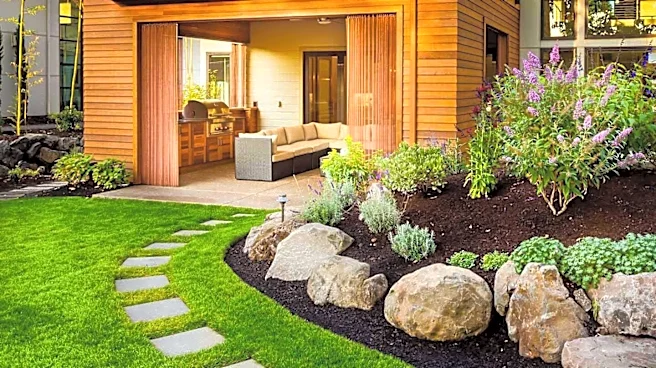
Key requirements include banning all plants within one foot of the house and prohibiting combustible materials such as firewood, fallen leaves, branches, mulch, and wood chips in the entire five-foot zone. Additionally, wooden sheds are banned, and wooden fences attached to homes are prohibited within this zone. These regulations apply to an estimated two million homes in State Responsibility Areas and Very High Fire Hazard Severity Zones. After the formal rule-making process, expected to conclude in September, existing homeowners will have up to five years to comply, while new constructions must adhere immediately.
Why It's Important?
The implementation of 'Zone Zero' rules marks a significant shift in California's approach to wildfire prevention, directly impacting millions of homeowners and potentially reshaping residential landscapes across fire-prone regions. This initiative is crucial given that wildfires have burned approximately 14 million acres and destroyed over 60,000 homes and structures in the last decade. The regulations aim to increase home survival rates, with studies showing that properties clearing vegetation from Zone Zero had a 37% survival rate, compared to 20% for those taking no precautions. While intended to enhance public safety and reduce property loss, the rules also present financial and logistical challenges for homeowners, particularly those with lower incomes or disabilities, who may struggle with the costs of compliance. The debate surrounding these rules highlights the tension between environmental protection, public safety, and individual property rights, as well as the economic burden placed on residents.
What's Next?
The formal rule-making process for the 'Zone Zero' regulations is expected to be completed in September. Following this, homeowners in affected areas will have a phased timeline for compliance: three years for phase one, which focuses on removing combustible materials within five feet of the house, and five years for phase two, addressing more extensive changes like the one-foot vegetation-free safety zone and replacement of combustible gates. Enforcement will be carried out by Cal Fire in State Responsibility Areas and by local fire authorities in local responsibility areas, potentially involving property inspections and penalties. Proponents of more lenient rules are advocating for state programs to help middle- and lower-income homeowners finance these changes and provide assistance to older and disabled residents. Local governments also retain the flexibility to adopt alternative versions of Zone Zero, with some cities already having done so or being in the process.
Beyond the Headlines
The 'Zone Zero' regulations delve into the complex interplay between individual property rights, community safety, and the escalating climate crisis. While the immediate goal is to mitigate wildfire risk, the rules raise ethical questions about the extent to which the state can dictate private land use for public good, especially when compliance incurs significant costs for homeowners. The debate also highlights a broader societal challenge: how to adapt to a changing climate while ensuring equitable outcomes. The call for financial assistance and support programs for vulnerable populations underscores the potential for these regulations to exacerbate socio-economic disparities if not carefully managed. Furthermore, the emphasis on 'defensible space' around homes reflects a shift from solely relying on large-scale firefighting efforts to empowering individual homeowners as a critical line of defense, fostering a collective responsibility in wildfire management. This could set a precedent for future climate adaptation policies in other disaster-prone regions.