




What's Happening?
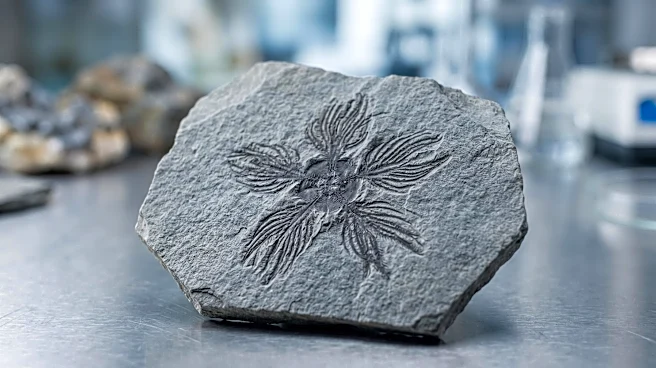
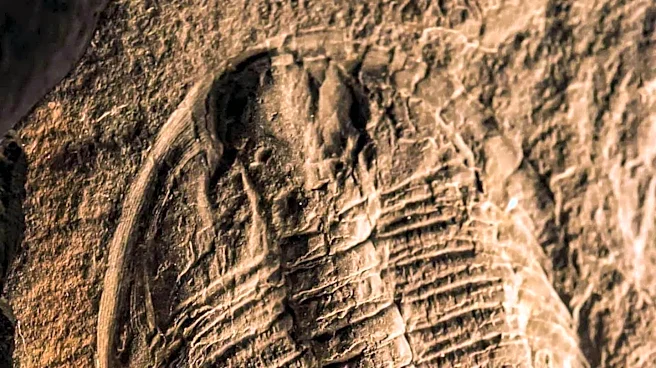
Scientists have uncovered a 518-million-year-old fossil, named Yujingia glutenotunica, from the early Cambrian Chengjiang biota in southwestern China. This discovery is reshaping understanding of the early evolution of ambulacrarians, a group that includes
starfish, sea urchins, and acorn worms. The Yujingia fossil, which preserves delicate body parts, gut, and appendages, suggests that the shared ancestor of these animals likely fed with specialized tentacles, rather than through a pharyngeal filter-feeding system as previously hypothesized. The fossils, ranging from 8 to 22 millimeters long, show an elongated, bottle-shaped body with a crown of feather-like appendages adapted for capturing suspended organic particles. A second set of appendages is believed to have aided temporary attachment to the seafloor, indicating a semi-sessile lifestyle. This finding challenges the long-standing 'worm-like' model for the common ancestor of ambulacrarians, which posited a tentacle-less animal feeding by filtering particles through its pharynx.
Why It's Important?
This discovery is significant for evolutionary biology as it provides a rare glimpse into a soft-bodied ambulacrarian near a crucial evolutionary branching point. It suggests that complex suspension-feeding structures evolved much earlier in ambulacrarian history than previously recognized, predating the mineralized skeletons seen in many later echinoderms. The Yujingia fossil serves as an important transitional form, linking early Cambrian tentacled organisms with later hemichordates and echinoderms. This re-evaluation of ancestral feeding mechanisms helps explain the divergent body plans observed in modern deuterostomes, such as the fivefold radial symmetry of starfish versus the bilaterally symmetrical bodies of acorn worms. It highlights how ecological differences, particularly feeding strategies, may have driven these evolutionary paths, with some lineages becoming more mobile for food acquisition while others specialized in particle feeding while remaining associated with the seafloor.
What's Next?
The ongoing analysis of Yujingia and similar Cambrian fossils will likely lead to further refinements in the understanding of early animal evolution. Researchers will continue to integrate these new anatomical insights with genetic data and phylogenetic reconstructions to build a more comprehensive picture of the animal family tree. This discovery may prompt a re-examination of other early Cambrian fossils for similar tentacle-based feeding structures, potentially uncovering more transitional forms. Future research could also focus on the environmental conditions of the Cambrian period to better understand how these unique feeding strategies developed and contributed to the rapid diversification of life during the Cambrian Explosion. The findings will undoubtedly influence textbooks and scientific models concerning the origins of major animal groups.
Beyond the Headlines
The Yujingia discovery underscores the dynamic nature of scientific understanding, where new fossil evidence can fundamentally alter long-held theories about evolutionary pathways. It highlights the critical role of exceptional fossil preservation, such as that found in the Chengjiang biota, in revealing the delicate, soft-bodied features that are often lost in the fossil record. This challenges the assumption that the absence of evidence equates to the absence of a trait, particularly for soft tissues. The study also emphasizes the intricate interplay between an organism's feeding strategy, its environment, and its subsequent evolutionary trajectory, demonstrating how specialized adaptations can lead to significant diversification. The continuous discovery of such ancient life forms enriches our appreciation for the complexity and ingenuity of early life on Earth and the processes that shaped the biodiversity we see today.