




What's Happening?
A number of Americans in the Democratic Republic of the Congo have been exposed to suspected Ebola cases during the country's latest outbreak. Sources indicate that several individuals have had high-risk exposures, with at least one potentially developing
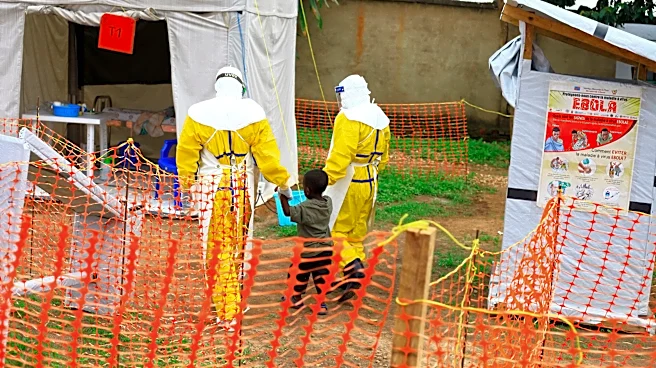
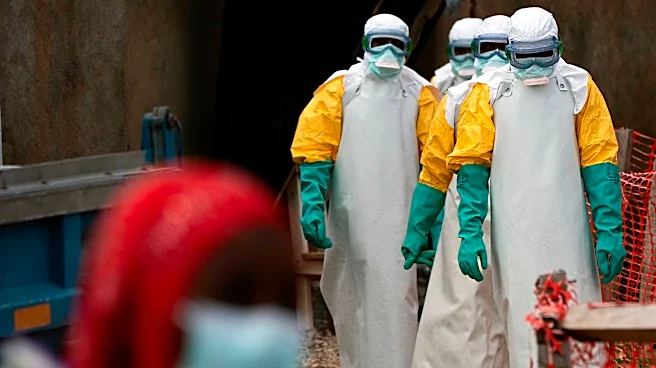
symptoms. The U.S. government is reportedly arranging for their evacuation to a location where they can be safely quarantined and treated if necessary. The Centers for Disease Control and Prevention (CDC) is coordinating with interagency partners to facilitate the safe withdrawal of these individuals. The outbreak has already resulted in at least 246 suspected cases and 80 deaths, including four health workers. The World Health Organization has declared the outbreak a public health emergency of international concern.
Why It's Important?
The exposure of Americans to Ebola in the Congo highlights the ongoing global health risks posed by infectious diseases. The potential evacuation and quarantine of these individuals underscore the challenges in managing international health crises and the importance of rapid response mechanisms. The outbreak's declaration as a public health emergency by the WHO emphasizes the severity of the situation and the need for coordinated international efforts to contain the virus. The involvement of U.S. citizens also raises concerns about the spread of the virus beyond the Congo, potentially affecting global travel and health security.
What's Next?
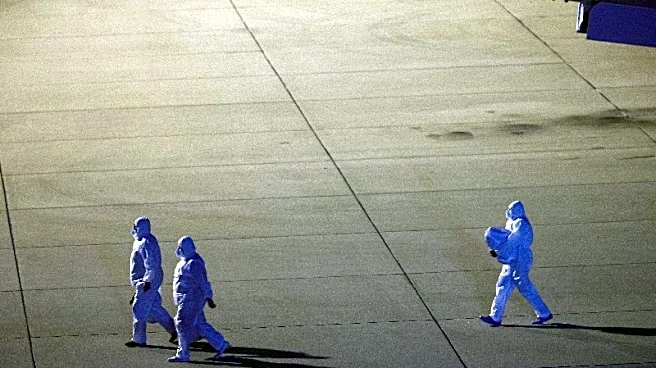
The U.S. government is expected to continue its efforts to evacuate the exposed Americans, possibly to a military base in Germany or another secure location. The CDC is likely to deploy experts to assist with the outbreak response in the Congo. Monitoring and containment measures will be crucial to prevent further spread of the virus, both within the Congo and internationally. The situation remains fluid, with ongoing assessments and potential adjustments to the response strategy as more information becomes available.