






What's Happening?
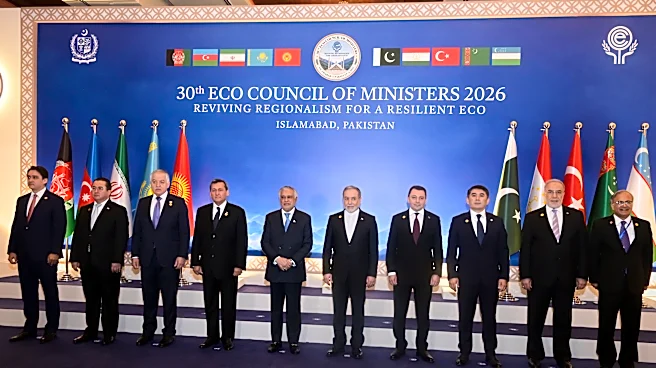
Deputy Prime Minister and Foreign Minister Ishaq Dar of Pakistan has called upon the Afghan Taliban government to take effective action against terrorism to foster a stable security environment. This appeal was made during the 30th meeting of the Economic
Cooperation Organisation (ECO) Council of Foreign Ministers in Islamabad. Dar emphasized that a peaceful, prosperous, and stable Afghanistan, fully integrated into the ECO framework, is crucial for regional economic cooperation. He highlighted that an Afghanistan at peace with itself and its neighbors would not only benefit its own populace but also contribute significantly to peace and prosperity across the entire region. The discussions also focused on strengthening regional connectivity amidst global uncertainties and rapid technological advancements, with Pakistan reaffirming its commitment to the ECO charter's principles of sovereign equality, mutual respect, non-interference, and cooperation based on mutual benefits. The ECO region, strategically located at the crossroads of South Asia, Central Asia, and West Asia, offers significant natural resources and trade opportunities.
Why It's Important?
This call from Pakistan underscores the persistent regional concerns regarding security and stability, particularly the spillover effects of terrorism originating from Afghanistan. For the U.S. and its allies, regional stability in South and Central Asia is critical for counter-terrorism efforts and broader geopolitical interests. The presence of militant groups in Afghanistan, if unchecked, could pose a threat to international security and potentially destabilize neighboring countries, impacting trade routes and economic development. Pakistan's emphasis on integrating Afghanistan into the ECO framework suggests a regional approach to stability, which could complement international efforts to encourage responsible governance in Afghanistan. The economic implications are significant; enhanced regional connectivity and trade, as advocated by Dar, depend heavily on a secure environment. Instability could deter foreign investment, disrupt supply chains, and hinder economic growth in a region that is vital for global trade and energy security. The U.S. has a vested interest in seeing a stable and secure Afghanistan that does not harbor terrorist organizations, as this directly impacts its national security and foreign policy objectives.
What's Next?
Pakistan is set to host the 19th ECO Summit in 2027 and the 31st ECO Council of Ministers meeting in 2027, providing further platforms for discussions on regional cooperation and security. These upcoming meetings will likely continue to press the Afghan Taliban government on its commitments to counter-terrorism. The adoption of the Strategic Goals of Economic Cooperation-2035 and the Islamabad Communiqué will guide future regional initiatives, with Pakistan pledging to work closely with member states to translate these commitments into practical outcomes. The international community, including the U.S., will be closely observing these developments, as the effectiveness of regional cooperation in addressing terrorism and fostering economic integration will have broader implications for global security and stability. Continued diplomatic pressure and engagement with the Afghan Taliban, both regionally and internationally, will be crucial in shaping the future trajectory of Afghanistan and its impact on the surrounding areas.
Beyond the Headlines
The ongoing discussions highlight the complex interplay between security, economic development, and regional diplomacy in South and Central Asia. The call for the Afghan Taliban to act against terrorism reflects a broader international concern about the group's governance and its adherence to international norms. This situation also brings to light the ethical considerations of engaging with a regime that has been widely criticized for human rights abuses, particularly concerning women and minorities. The long-term implications could include a re-evaluation of international aid and engagement strategies with Afghanistan, contingent on tangible actions against terrorism. Furthermore, the emphasis on regional economic integration suggests a potential shift towards self-reliance and intra-regional trade, which could alter existing geopolitical alignments and reduce dependence on external powers. The success or failure of these regional diplomatic efforts will set a precedent for how the international community addresses similar challenges in other conflict-affected regions.