



What's Happening?
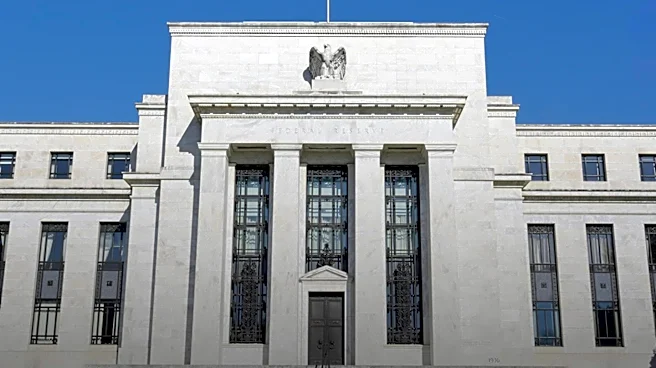
Kansas City Fed President Jeff Schmid stated that the Federal Reserve has the tools and responsibility to address inflation, which he described as "uncomfortably above the 2% price stability target" and "moving in the wrong direction." Speaking at a credit
union conference in Hawaii, Schmid challenged common narratives suggesting that current inflation is solely due to supply shocks or demand impervious to higher interest rates. He emphasized that inflation is always a result of an imbalance between supply and demand, and strong demand plays a crucial role. Schmid, who is not a Federal Open Market Committee voting member this year, did not explicitly call for additional rate hikes but underscored the Fed's mandate to achieve price stability. His comments follow recent inflation readings that have come in higher than expected, leading interest rate futures markets to price in a quarter-point increase at the Fed's December meeting.
Why It's Important?
Schmid's remarks are significant as they reinforce the Federal Reserve's commitment to combating inflation, even as some narratives attempt to downplay its influence. His assertion that the Fed possesses the necessary tools to address inflation, despite arguments about supply shocks or AI-driven demand, signals a firm stance on monetary policy. This perspective is crucial for businesses and consumers, as it suggests that the Fed will continue to prioritize price stability, potentially through further interest rate adjustments. The ongoing debate about the sources of inflation and the Fed's capacity to control it directly impacts economic forecasts, investment strategies, and borrowing costs across the U.S. economy. A sustained focus on bringing inflation down to the 2% target could lead to tighter financial conditions, affecting everything from housing markets to corporate spending.
What's Next?
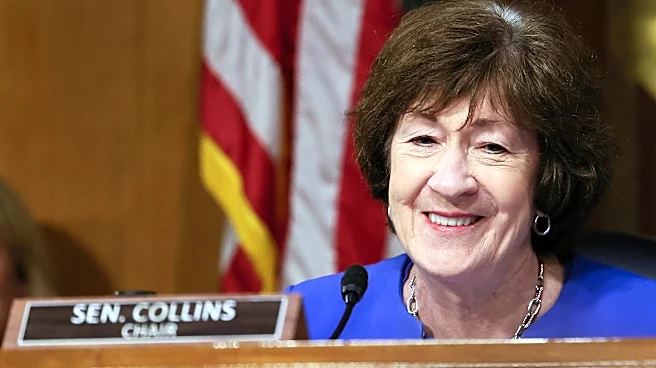
Following Schmid's statements and recent inflation data, market expectations are now fully pricing in a quarter-point interest rate increase at the Federal Reserve's December meeting, with a slight possibility of a half-point hike. This indicates that the Fed is likely to continue its tightening cycle to bring inflation under control. The Federal Reserve Bank of Boston President Susan Collins also supported a steady pace of modest interest rate increases to manage economic uncertainties. The Federal Open Market Committee will closely monitor upcoming economic indicators, particularly inflation and employment data, to guide its future policy decisions. Businesses and consumers should anticipate continued vigilance from the Fed regarding price stability, which could translate into higher borrowing costs and a potentially slower economic growth trajectory in the near term.
Beyond the Headlines
The discussion around inflation's causes, whether primarily supply-driven or demand-driven, has broader implications for economic policy beyond just interest rates. If inflation is largely seen as a demand-side issue, as Schmid suggests, then monetary policy tools like interest rate hikes are considered effective. However, if supply shocks are the dominant factor, then monetary policy might be less effective, and other policy interventions, such as those aimed at supply chain resilience or energy policy, might be more appropriate. Schmid's pushback against narratives that inflation is beyond the Fed's control highlights a fundamental belief within the central bank about its role and efficacy. This philosophical debate within the Fed could influence the long-term approach to economic management, potentially leading to a more proactive stance on inflation even in the face of external shocks.