









What's Happening?
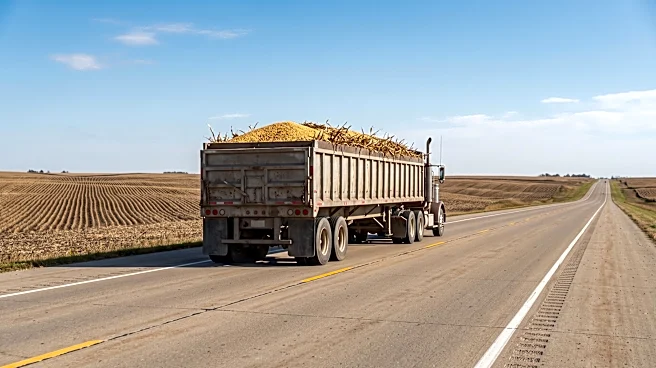
Iowa Governor Kim Reynolds has signed a proclamation extending the weight limits for vehicles transporting agricultural commodities. This proclamation, effective immediately and continuing through December 6, 2026, allows vehicles carrying corn, soybeans,
hay, straw, silage, stover, fertilizer (dry, liquid, and gas), and manure (dry and liquid) to exceed standard weight limits without requiring a special permit. The gross weight for these vehicles can be up to 90,000 pounds. This measure applies to all highways within Iowa, with the exception of the interstate system. Additionally, the proclamation specifies that axle weight limits determined under Iowa Code § 321.463 (6) (a)-(b) cannot be exceeded by more than 12.5 percent, and the legal maximum axle weight limit of 20,000 pounds must be respected. All vehicles must also comply with posted limits on roads and bridges.
Why It's Important?
This extension of the harvest proclamation is crucial for Iowa's agricultural sector, a cornerstone of the state's economy. By temporarily relaxing weight restrictions, the proclamation facilitates the efficient and timely transportation of crops and essential agricultural inputs during peak harvest and planting seasons. This directly benefits farmers by reducing logistical bottlenecks and potentially lowering transportation costs, which can significantly impact their profitability. The ability to move larger quantities of goods per trip helps to streamline operations, especially when dealing with perishable products or time-sensitive deliveries like fertilizer application. Without such a measure, farmers and agricultural businesses could face increased operational expenses, delays, and potential losses due to stricter transportation regulations, ultimately affecting the supply chain and consumer prices for agricultural products.
What's Next?
The proclamation is set to remain in effect until December 6, 2026. During this period, agricultural producers and transporters in Iowa will continue to operate under the relaxed weight limits, allowing for continued efficiency in the movement of crops and farm-related materials. As the expiration date approaches, stakeholders in the agricultural industry will likely monitor the situation closely, and there may be discussions regarding potential further extensions or permanent adjustments to transportation regulations, depending on future agricultural needs and economic conditions. The Iowa Department of Transportation and other relevant state agencies will be responsible for enforcing the conditions of the proclamation, ensuring compliance with the specified weight and axle limits on non-interstate highways.
Beyond the Headlines
The recurring need for such proclamations highlights the inherent tension between infrastructure preservation and the economic demands of a robust agricultural industry. While these temporary waivers provide immediate relief to farmers, they also raise questions about the long-term impact on Iowa's road infrastructure. The increased weight on non-interstate highways could accelerate wear and tear, potentially leading to higher maintenance costs for the state. This situation underscores the broader challenge of balancing economic productivity with sustainable infrastructure management. It also reflects the significant influence of the agricultural lobby in states like Iowa, where farming is a dominant economic force, often leading to policy decisions that prioritize agricultural efficiency.