
What's Happening?
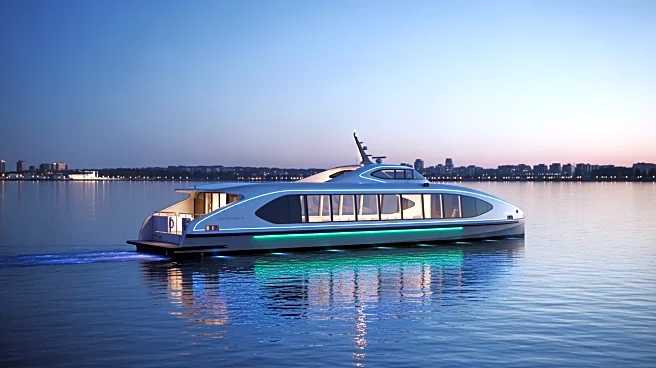
Stockholm has successfully integrated the Candela P-12, an electric flying ferry, into its public transport system. The ferry has halved travel times and significantly reduced emissions, offering a quiet
and efficient alternative to traditional diesel ferries. The P-12 operates on Route 89, connecting the suburb of Ekero with central Stockholm. It has been well-received by passengers, with a 22.5% increase in ridership and 95% positive feedback. The ferry's design allows it to 'fly' above water, reducing drag and energy consumption, and enabling high-speed travel with minimal environmental impact.
Why It's Important?
The introduction of the Candela P-12 ferry represents a significant advancement in sustainable urban transport. By drastically reducing emissions and travel times, it sets a precedent for other cities looking to modernize their public transport systems. The success of the P-12 could encourage further investment in electric and hydrofoil technology, potentially leading to widespread adoption in urban areas worldwide. This shift could reduce reliance on fossil fuels, decrease urban congestion, and improve air quality, aligning with global sustainability goals.
What's Next?
With the P-12 already in serial production, Candela plans to expand its reach to international markets, including Mumbai, the Maldives, and Berlin. The success in Stockholm may prompt other cities to consider similar innovations in their transport systems. Future developments could include more frequent departures and increased passenger capacity, further enhancing the efficiency and appeal of waterborne transport. Policymakers may also explore regulatory changes to support the adoption of such technologies.