

What's Happening?
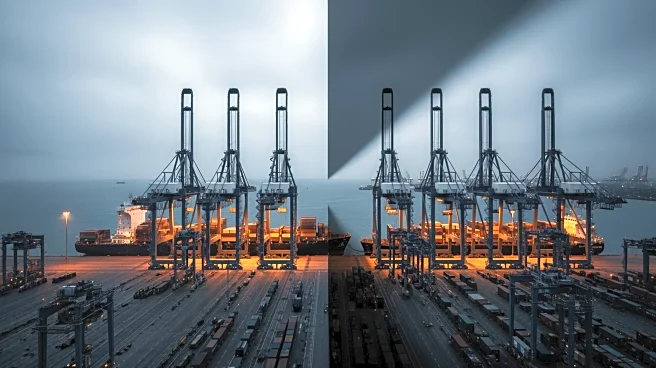
The Trump administration has issued a warning regarding China's influence over Peru's critical infrastructure, specifically focusing on the Chinese-built Chancay port. This $1.3 billion deepwater port, located north of Lima, has become a focal point of U.S.-China
tensions in Latin America. The U.S. State Department expressed concerns that Peru might lose its ability to oversee the port due to a recent court ruling that limits the regulatory powers of a local Peruvian agency over the port. The Chancay port is part of China's Belt and Road initiative, which has seen significant Chinese investment in infrastructure projects across the globe. The port is operated by China's state-owned company Cosco, which has dismissed U.S. claims, asserting that the port remains under Peruvian jurisdiction and is subject to local regulations.
Why It's Important?
This development highlights the growing geopolitical tensions between the U.S. and China, particularly in Latin America, where China has been expanding its influence through infrastructure investments. The U.S. views China's financial involvement as a threat to the sovereignty of nations like Peru, potentially undermining local governance and regulatory frameworks. The situation underscores the broader strategic competition between the U.S. and China for influence in the Western Hemisphere. For Peru, the port is a critical asset for trade, especially with China being its largest trading partner. The outcome of this dispute could set a precedent for how other countries in the region manage Chinese investments and their own sovereignty.
What's Next?
The Peruvian regulator, Ositran, plans to appeal the court ruling that limits its oversight of the Chancay port. This legal battle will be closely watched as it could influence future regulatory practices and foreign investment policies in Peru and beyond. The U.S. is likely to continue its diplomatic efforts to counter China's influence in the region, potentially leading to increased political and economic engagement with Latin American countries. Meanwhile, China will likely continue to defend its investments and seek to reassure host countries of their sovereignty and control over local projects.