
What's Happening?
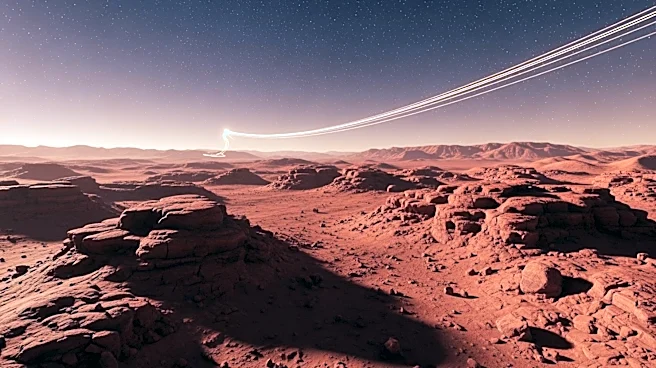
NASA's Curiosity Mars rover has captured a timelapse of its six-year journey on the Martian surface using its right navigation camera. The images, taken between January 2, 2020, and March 8, 2026, document
the rover's path and are used by scientists to study the movement of sand grains on the rover's deck. This data helps distinguish between sand movement caused by the rover's drives and wind gusts, providing insights into seasonal atmospheric changes on Mars. The Curiosity mission, managed by NASA's Jet Propulsion Laboratory, is part of NASA's Mars Exploration Program, which aims to study the Martian environment and prepare for future human exploration.
Why It's Important?
The timelapse provides valuable data for understanding Martian weather patterns and surface conditions, which are critical for planning future missions. By analyzing how sand grains move, scientists can gain insights into the planet's atmospheric dynamics, which is essential for designing equipment and strategies for human exploration. The Curiosity rover's ongoing mission continues to contribute to our understanding of Mars, supporting NASA's long-term goals of sending humans to the Red Planet. This research not only advances planetary science but also aids in developing technologies for sustainable human presence on Mars.