







What's Happening?
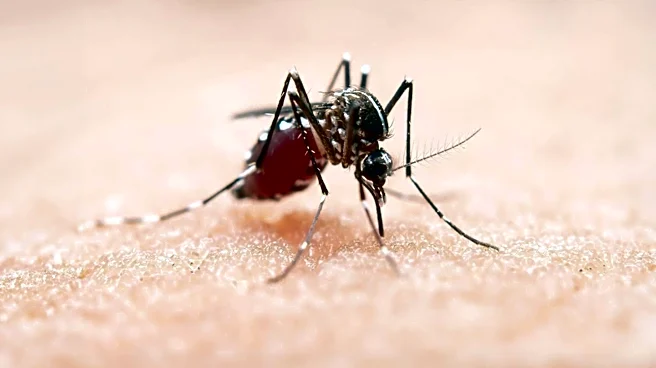
The Florida Department of Health in Sarasota County (DOH-Sarasota) has issued a mosquito-borne illness advisory after confirming a human case of locally acquired West Nile virus. DOH-Sarasota is collaborating with Sarasota County Mosquito Management Services
to monitor and prevent further mosquito-borne illnesses. Mosquito control treatments have already been implemented in the affected area. The health department did not disclose the specific location of the treatments or details about the patient. Statewide, the Florida Department of Health is continuously monitoring for various mosquito-borne illnesses, including West Nile virus, Eastern equine encephalitis, St. Louis encephalitis, malaria, chikungunya, and dengue. Residents are advised to take precautions to avoid mosquito bites and can report dead birds to the Florida Fish and Wildlife Conservation Commission.
Why It's Important?
This advisory is important as it highlights the ongoing public health risk posed by mosquito-borne diseases in Florida. The confirmation of a locally acquired West Nile virus case indicates active transmission within the community, necessitating immediate public awareness and preventative measures. Such outbreaks can strain local healthcare resources and impact public safety, particularly for vulnerable populations. The broader statewide surveillance for multiple diseases like dengue and chikungunya underscores the persistent challenge of managing mosquito populations and preventing disease spread in a warm, humid climate. Effective mosquito control and public education are crucial to mitigate the health and economic impacts of these illnesses on residents and the tourism industry.
What's Next?
Following the advisory, DOH-Sarasota and Sarasota County Mosquito Management Services will likely continue their surveillance and treatment efforts in the affected and surrounding areas. Residents are expected to adhere to recommended precautions, such as eliminating standing water, using insect repellent, and wearing protective clothing, to reduce their risk of exposure. Public health campaigns may intensify to educate the community on prevention strategies. The Florida Department of Health will maintain its statewide monitoring for various mosquito-borne illnesses, and any further confirmed cases could lead to expanded advisories or control measures. The long-term strategy will involve sustained mosquito management programs and public health initiatives to minimize future outbreaks.
Beyond the Headlines
The recurring issue of mosquito-borne illnesses in Florida, as evidenced by this West Nile virus case, points to deeper environmental and public health challenges. The state's climate, conducive to mosquito breeding, makes it a hotspot for such diseases. This situation raises questions about the efficacy of current long-term mosquito control strategies and the potential need for innovative approaches, including community-level interventions and advanced surveillance technologies. Furthermore, the public's role in prevention, such as eliminating standing water on private property, is critical but often overlooked. The economic implications extend beyond healthcare costs, potentially affecting tourism and outdoor recreational activities if outbreaks become widespread or frequent, highlighting the interconnectedness of public health, environment, and economy.