

What's Happening?
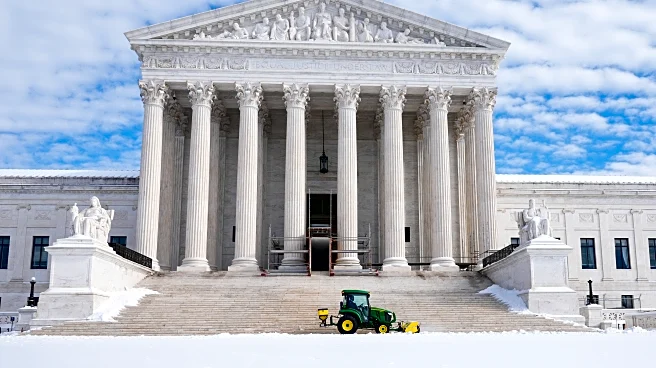
The Supreme Court is reviewing a case concerning President Trump's authority to dismiss a Federal Trade Commissioner, potentially overturning a 90-year precedent that limits presidential power over independent agencies. The case challenges the 1935 Humphrey's
Executor decision, which restricts the president's ability to remove agency members without cause. The court's conservative majority appears supportive of expanding presidential control, which could redefine the balance of power between the executive branch and independent agencies. This case could have significant implications for the autonomy and function of federal regulatory bodies.
Why It's Important?
A decision in favor of President Trump could fundamentally alter the structure of the federal government by increasing presidential influence over independent agencies. This shift could undermine the agencies' ability to operate free from political pressures, affecting their regulatory roles and the enforcement of laws designed to protect public interests. The ruling could also set a precedent for future administrations, impacting how executive power is exercised and the independence of federal agencies. The decision could have broad implications for the functioning of government and the protection of consumer and business interests.
What's Next?
The Supreme Court's decision, expected by June 2026, will determine the extent of presidential power over independent agencies. If the court rules in favor of Trump, it could lead to increased executive control over regulatory bodies, prompting potential legislative responses or further legal challenges. The ruling may also influence ongoing and future cases related to the separation of powers and the autonomy of federal agencies, shaping the landscape of federal governance for years to come.