
What's Happening?
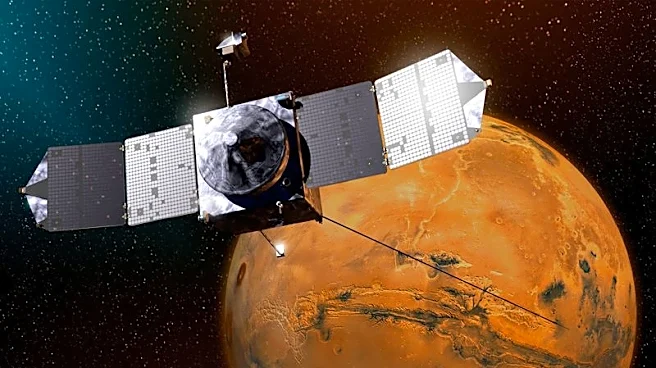
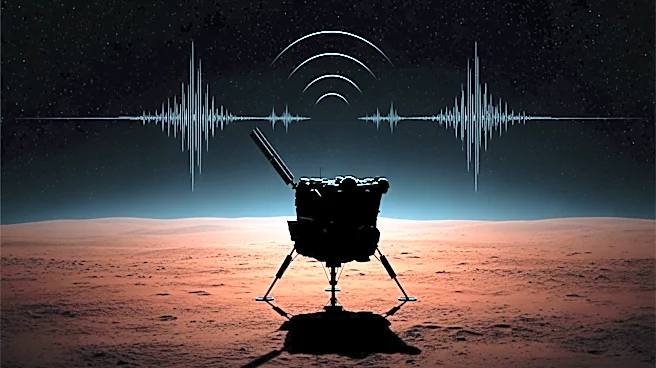
NASA has officially ended the MAVEN mission after the spacecraft lost contact with Earth in December 2025. MAVEN, launched in 2013, was the first mission dedicated to studying the Martian atmosphere and
its interactions with the Sun. The spacecraft entered an uncontrolled spin after passing behind Mars, which led to a loss of power and communication. Despite efforts to recover the spacecraft, it was deemed unrecoverable. The mission provided valuable data on Mars' atmospheric loss and its climate history, contributing significantly to our understanding of the planet's evolution and potential habitability.
Why It's Important?
The MAVEN mission has been instrumental in advancing our knowledge of Mars' atmosphere and its interactions with solar winds. The data collected has helped scientists understand how Mars' atmosphere has been stripped away over time, transforming the planet from a potentially habitable environment to its current state. This information is crucial for future Mars exploration, particularly in planning for human missions. The mission's findings will continue to inform research on planetary atmospheres and contribute to the development of strategies for protecting future astronauts from radiation and other hazards on Mars.
What's Next?
While the MAVEN mission has concluded, the investigation into the cause of the spacecraft's failure is ongoing, with a final report expected later this year. NASA is in the process of decommissioning the mission and archiving its data for future study. The insights gained from MAVEN will continue to influence Mars research and exploration strategies, particularly in understanding the planet's climate history and preparing for human exploration. The mission's legacy will persist through the continued analysis of its data, which will aid in the development of future Mars missions and contribute to our broader understanding of planetary science.