

What's Happening?
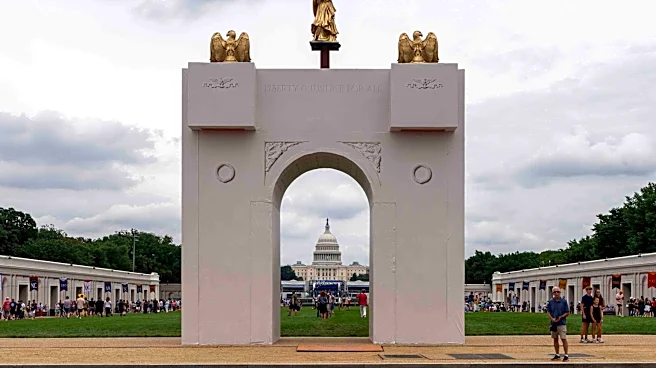
Several members of the Kennedy family have filed to join a court case aimed at preventing President Donald Trump from constructing a triumphal arch in Washington D.C. The proposed 76-meter arch, which would feature a flame held by a gold winged female
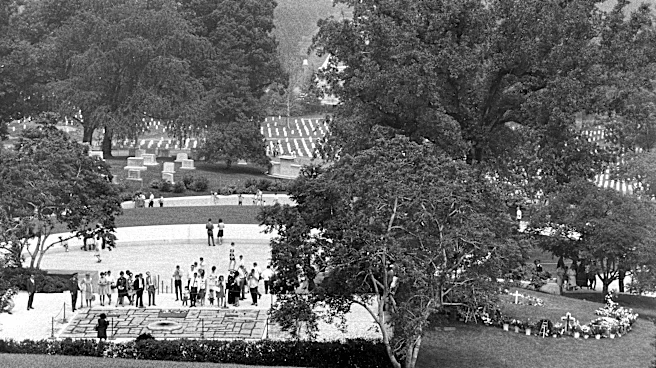
figure and flanked by gold flying eagles, is planned for a highway roundabout across the Potomac River from the Lincoln Memorial, near the entrance to Arlington National Cemetery. The family argues that the arch would obstruct views and cast shadows over their relatives' grave sites, including that of former president John F. Kennedy, as well as memorials for hundreds of thousands of fallen American heroes. A judge has already issued a temporary order halting construction until November 19, while considering whether to issue a preliminary injunction. The Trump administration defends the project, stating it is intended to honor veterans and that Congress approved the arch over a century ago when it authorized a bridge across the Potomac.
Why It's Important?
This legal challenge highlights a significant cultural and historical dispute over public land use and memorialization in Washington D.C. The Kennedy family's involvement underscores the deep personal and historical connections to Arlington National Cemetery, a site of immense national significance. The potential obstruction of views and casting of shadows over grave sites raises concerns about respecting the sanctity and historical integrity of the cemetery. The Trump administration's assertion of prior congressional approval and its intent to honor veterans positions the project as a patriotic endeavor, setting up a conflict between historical preservation, family legacy, and governmental prerogative. The outcome of this case could establish precedents for future development near national monuments and cemeteries, influencing how historical landscapes are protected and how new memorials are integrated into existing sacred spaces.
What's Next?
The immediate next step is the judge's decision on whether to issue a preliminary injunction, which would further halt construction beyond November 19. This decision will be crucial in determining the project's immediate future. Should the injunction be granted, it would provide more time for legal arguments and potentially lead to a more prolonged court battle. Conversely, if the injunction is denied, the Trump administration could proceed with construction, though it would likely face continued legal challenges and public opposition. Furthermore, numerous Democrats in Congress have vowed to block construction once they assume control in January, following their wins in the November midterm elections. This indicates that even if the court allows the project to proceed, it could face legislative hurdles, potentially leading to a protracted political and legal struggle over the arch's fate.
Beyond the Headlines
The dispute over President Trump's proposed arch extends beyond a simple land-use conflict, touching upon deeper themes of national memory, political symbolism, and the interpretation of historical mandates. The Kennedy family's opposition, rooted in the preservation of their family's legacy and the broader sanctity of Arlington, contrasts with the administration's vision of a new monument honoring veterans. This clash reflects differing philosophies on how national heroes and historical events should be commemorated in the nation's capital. The debate also implicitly questions the balance of power between executive authority, judicial oversight, and legislative intent, especially concerning projects with significant public and historical impact. The outcome could influence future discussions on how new national symbols are introduced and how existing historical landscapes are protected from perceived encroachments, potentially setting a precedent for how the nation balances progress with preservation.