

What's Happening?
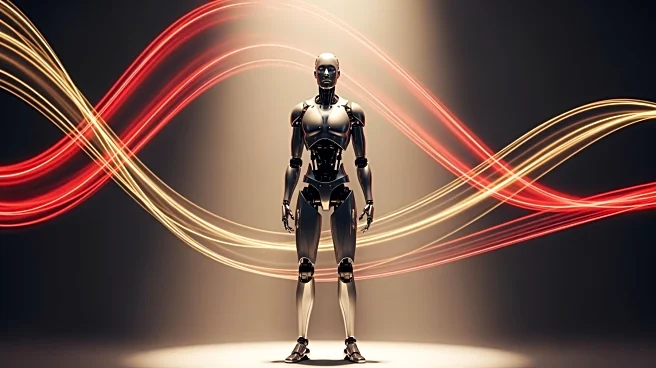
The Chinese robotics industry demonstrated significant advancements in humanoid robots during the Spring Festival Gala, featuring a synchronized martial arts routine with Unitree G1 robots. These robots performed complex maneuvers, including running up
walls, showcasing the rapid progress in China's robotics capabilities. The performance highlighted the country's strengths in AI, hardware supply chains, and manufacturing. Despite the impressive display, questions remain about the practical applications of these robots in everyday tasks, as companies continue to work on adapting them to real-world environments.
Why It's Important?
China's advancements in robotics underscore its growing influence in the global technology landscape. The country's ability to integrate AI and manufacturing expertise positions it as a formidable competitor in the robotics sector. This development could have implications for international markets, including the U.S., as companies like Tesla work on similar technologies. The focus on robotics also reflects broader trends in automation and AI, which are reshaping industries and labor markets worldwide.
Beyond the Headlines
While the performance was impressive, the practical application of humanoid robots in daily life remains a challenge. The ability to perform complex tasks in controlled environments does not necessarily translate to effectiveness in unstructured settings. The ongoing development of these robots will need to address adaptability and functionality to achieve widespread adoption. This highlights the broader challenges facing the robotics industry as it seeks to balance innovation with practical utility.