




What's Happening?
A New Bedford City Council meeting on Thursday night descended into chaos, leading to its suspension by the council president before any votes could be cast on four motions concerning Flock cameras. The public chamber was filled with approximately 70
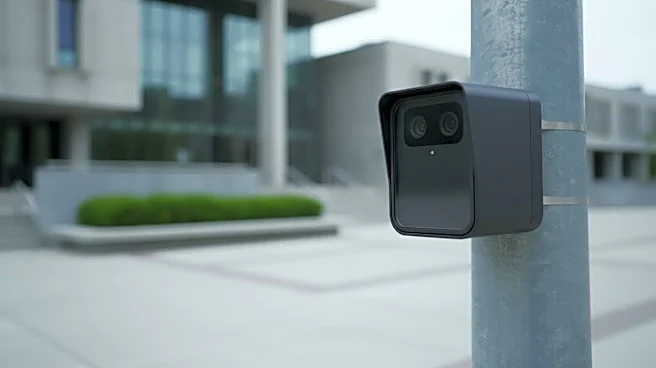
people, many of whom had participated in a protest outside City Hall. As Councilor Brian Gomes, chair of the Public Safety Committee, expressed views favorable to the camera system, shouts of 'Flock off,' 'Take them down,' and 'De-Flock now' erupted from the balcony. City Council President Ryan Pereira initially called a recess, during which eight police officers arrived. However, due to continued disruptions and a lack of decorum, Pereira ultimately suspended the meeting. This suspension delays further action by the council, including the opportunity to question the police chief about the controversial license plate reader system, which the Police Department had recently suspended pending a review following allegations of misuse by an officer.
Why It's Important?
The disruption and subsequent suspension of the City Council meeting underscore the intense public opposition and deep divisions surrounding the use of Flock cameras in New Bedford. This event highlights a critical tension between public safety measures and concerns over privacy and civil liberties. The allegations of an officer misusing the system to track an ex-girlfriend have eroded public trust and brought the issue to the forefront, prompting the Police Department to suspend the program. The delay in council action means that crucial discussions about policy enhancements, transparency, and the potential abolition of such surveillance technologies will be postponed. This situation reflects a broader national debate about the deployment of surveillance tools by law enforcement and the need for robust oversight and accountability to prevent abuses and protect citizens' rights. The community's vocal opposition signals a demand for greater transparency and democratic control over technology impacting daily life.
What's Next?
The suspension of the City Council meeting means that the four motions regarding Flock cameras will be tabled and are expected to be addressed at a special meeting scheduled for August 25. For these motions to be discussed and voted upon, they will require the support of six councilors to be brought up from the tabled items. The motions include calls for the public safety committee to meet with the police chief, the mayor's office, and Flock Safety representatives to enhance policies and procedures, as well as a motion to discuss the potential abolition of Flock cameras or the establishment of privacy and transparency standards. The police chief was not present at the suspended meeting, but Deputy Chief Derek Belong observed. The delay caused by the disruption means that the public will have to wait longer for official council action and for city officials, including the police chief, to answer questions regarding the system's use and oversight.
Beyond the Headlines
The controversy in New Bedford over Flock cameras extends beyond the immediate debate about surveillance technology; it touches upon fundamental questions of governance, public trust, and the balance of power between municipal authorities and their constituents. The public's strong reaction, culminating in the disruption of a council meeting, indicates a growing citizen engagement with issues of digital privacy and police accountability. This incident could serve as a catalyst for other communities to scrutinize their own surveillance policies and practices. Furthermore, the alleged misuse of the system by an officer highlights the inherent risks associated with powerful surveillance tools and the critical need for stringent ethical guidelines, comprehensive training, and independent oversight mechanisms. The outcome in New Bedford could influence how other cities approach the adoption and regulation of similar technologies, potentially leading to more robust public engagement and policy frameworks to safeguard civil liberties in the digital age.