




What's Happening?
Oak Ridge National Laboratory (ORNL), in partnership with A.J. Tuck Company, has developed a novel method for producing seamless nickel containers, known as HIP cans, for nuclear reactor components. This innovative process involves 3D printing a plastic
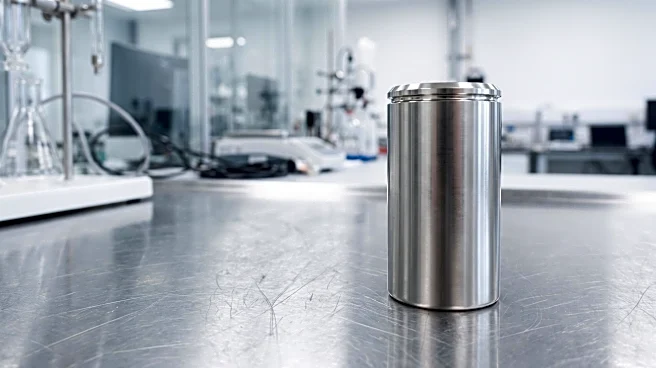
mold in the exact shape of the desired component, which is then placed in an electrolyte bath. Through electroforming, a dense nickel shell, approximately 2 to 3 millimeters thick, grows around the plastic mold. Subsequently, acid is used to dissolve the plastic from the interior, leaving a hollow nickel can with no welds. These weld-free cans are then filled with metal powder, sealed, and subjected to hot isostatic pressing (HIP) to form a solid metal part. This method directly addresses a critical failure point in traditional HIP can manufacturing, which relies on welding multiple pieces together, creating potential leak sites. In the initial phase, the team successfully produced five leak-free cylindrical cans, one of which was used to consolidate a 15.7-pound block of solid nickel.
Why It's Important?
This development is significant for the U.S. nuclear industry as it offers a more reliable and potentially more efficient way to manufacture critical reactor components. Traditional methods of creating HIP cans involve welding, which introduces vulnerabilities and potential failure points. By eliminating welds, ORNL and A.J. Tuck's process enhances the integrity and safety of these components, which is crucial for advanced nuclear reactors. Furthermore, the ability to produce these parts domestically could reduce reliance on overseas manufacturing facilities for heavy forgings, a current challenge for the U.S. nuclear power sector. This innovation could streamline the production of complex geometries required for advanced reactors, making the manufacturing process more cost-effective and adaptable. The partnership between a national lab and a specialized electroforming shop also highlights a pathway for industrial adoption of advanced manufacturing techniques.
What's Next?
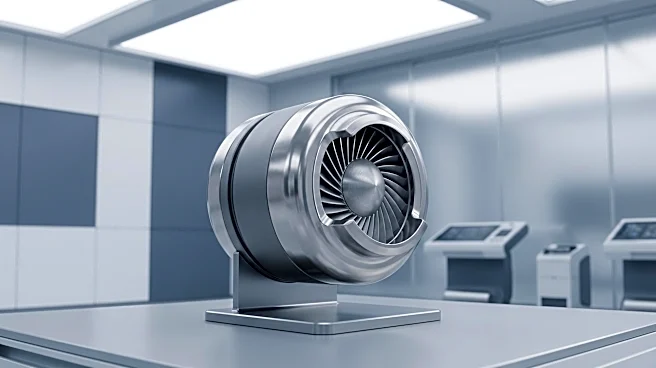
The project is currently in Phase 2, where the team is applying the electroforming process to more complex geometries, specifically an impeller or a valve relevant to nuclear systems. ORNL anticipates that this technology is suitable for applications requiring large, high-precision metal components, including reactor pressure vessels, valves, and turbine systems. An invention disclosure and a provisional patent have already been filed, indicating steps toward commercialization and broader implementation. Future steps will likely involve scaling up the process from the current 6-inch demonstration cans to full-size reactor components, a transition that typically requires extensive testing and certification. The success of Phase 2 will be crucial in demonstrating the versatility and scalability of this weld-free manufacturing technique for a wider range of nuclear applications.
Beyond the Headlines
Beyond the immediate technical advantages, this innovation represents a broader shift in manufacturing paradigms for critical infrastructure. By leveraging advanced techniques like 3D printing for molds and electroforming, the project moves away from traditional, labor-intensive fabrication methods that are prone to defects. This approach could inspire similar innovations in other high-stakes industries where component integrity is paramount, such as aerospace and defense. The collaboration between a national laboratory and a small, specialized company also underscores the potential for public-private partnerships to drive technological advancements and strengthen domestic manufacturing capabilities. This method not only improves product quality but also offers a more agile manufacturing process, allowing for rapid design changes and potentially faster deployment of new reactor technologies, which is vital for the future of nuclear energy in the U.S.