
What's Happening?
The Commissioners of St. Mary's County have unanimously approved a $5,000 grant to support an archaeological project aimed at locating the original Cross Manor, built in 1638 by colonial leader Thomas
Cornwallis. This project, led by Julie King, a professor of anthropology and archaeologist at St. Mary's College of Maryland, will involve students in the search for the historically significant residence. The funding, drawn from the commissioners' emergency reserve, will be managed by the St. Mary's College of Maryland Foundation and will help cover the costs of two staff archaeologists. Additionally, the Southern Maryland National Heritage Area has committed another $5,000 to support students in documenting the search through blog posts and public presentations. The search area, spanning approximately 20 to 30 acres, is on private property, with landowners granting permission for research. The project seeks to uncover one of early Maryland's finest homes, which was reportedly larger and more elaborate than most colonial houses of its time, featuring multiple rooms and potentially the earliest dedicated dining room in Maryland or Virginia.
Why It's Important?
This archaeological endeavor holds significant importance for several reasons. Firstly, it aims to expand the historical record of St. Mary's County and early Maryland, potentially revealing new insights into colonial life, architecture, and social structures. The original Cross Manor, built by a prominent figure like Thomas Cornwallis, was a key site during the colony's formative years, including being plundered during Richard Ingle's 1645 rebellion. The detailed descriptions from Cornwallis's lawsuit against Ingle provide a rare glimpse into the manor's interior and furnishings, which could be invaluable for understanding 17th-century colonial living. Secondly, the project serves an educational purpose by involving St. Mary's College students, offering them hands-on experience in archaeological research, excavation, and artifact analysis. This direct engagement with local history can foster a deeper appreciation for the region's past among future generations. Lastly, identifying and preserving archaeological resources, even on private land, helps prevent their unintentional destruction by future development and can strengthen heritage tourism in Southern Maryland, contributing to the local economy and cultural identity.
What's Next?
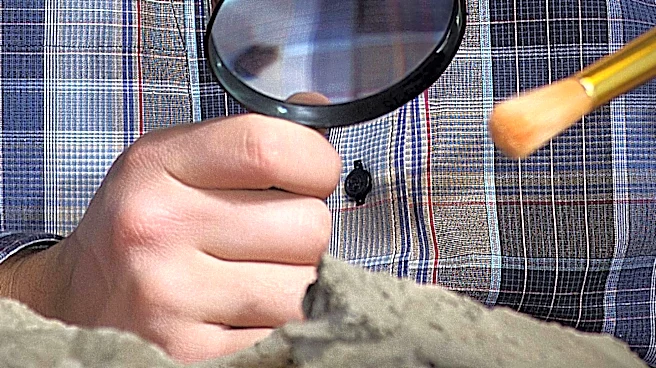
The archaeological project is expected to span approximately 10 weeks, with the work spread across two semesters to maximize student participation. Students will be actively involved in surveying the land, excavating potential sites, cleaning and identifying artifacts, and ultimately presenting their findings to the public. Professor King has also applied for additional funding from the Maryland Historical Trust, which could further enhance the project's scope and resources. The search will begin by leveraging evidence from the nearby St. Inigoes Manor, a known colonial site, to help narrow down the potential location of Cross Manor. Researchers will be looking for artifacts similar to those found at St. Inigoes, such as coin weights, Chinese porcelain, and tobacco-pipe fragments, as well as trade goods like beads, knives, and brass items, which could indicate Cornwallis's interactions with Indigenous communities. The ultimate goal is to reveal the remains of this extraordinary house and to demonstrate that St. Mary's County's rich history extends far beyond established historical sites, encompassing everyday landscapes.
Beyond the Headlines
Beyond the immediate goal of finding Cross Manor, this project touches upon deeper implications regarding historical preservation, public access to history, and the role of education in understanding the past. The question raised by Commissioner Scott Ostrow about using taxpayer money for a search on private property highlights the ongoing debate about balancing private land rights with public historical interest. Professor King's response, emphasizing the importance of identifying archaeological resources to prevent their destruction and to expand the county's historical record, underscores the long-term benefits of such initiatives. The project also implicitly addresses the challenge of making history accessible and relevant to contemporary citizens, particularly as Maryland approaches its 400th anniversary. By involving students and documenting the process through public presentations, the project aims to connect residents with the idea that history is not confined to museums but is embedded in the very landscape they inhabit, fostering a sense of place and continuity.