






What's Happening?
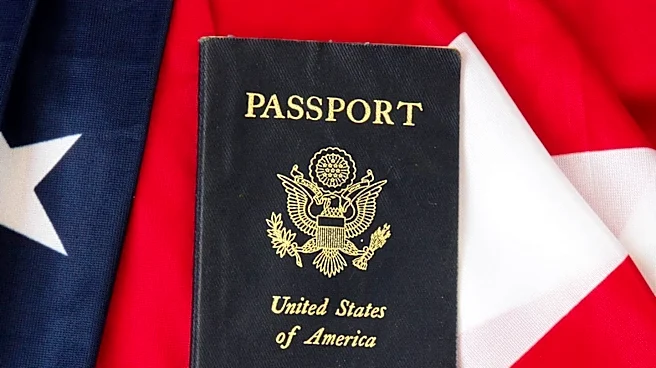
The United States passport has experienced a decline in global rankings, now positioned at 10th place according to the 2026 Henley Passport Index. This marks a significant drop from its previous standing among the world's most powerful passports. The index,
which evaluates the freedom of travel based on visa-free or visa-on-arrival access, highlights that U.S. passport holders now have access to fewer destinations compared to previous years. In contrast, countries like Singapore, Japan, and South Korea have maintained or improved their rankings, offering their citizens broader global mobility. The decline in the U.S. passport's ranking reflects broader geopolitical shifts and changes in international relations.
Why It's Important?
The decline in the U.S. passport's ranking has implications for American travelers and the country's diplomatic standing. A less powerful passport can limit travel freedom and increase the complexity of international travel for U.S. citizens. This shift may also reflect changing perceptions of the U.S. on the global stage, potentially affecting international business, tourism, and diplomatic relations. As other countries enhance their global mobility through strategic diplomatic efforts, the U.S. may need to reassess its international policies to maintain its influence and ensure its citizens' travel freedom.
What's Next?
The U.S. government may need to engage in diplomatic efforts to negotiate better travel agreements and restore the passport's standing. This could involve bilateral agreements with key countries to enhance visa-free access for U.S. citizens. Additionally, the travel industry and policymakers will need to address the practical implications for American travelers, potentially offering more resources and support to navigate the changing landscape. Monitoring future updates to the Henley Passport Index will provide insights into the effectiveness of these efforts and the evolving dynamics of global mobility.