




What's Happening?
Recent research has revealed that some microbes found on Ötzi the Iceman's 5,300-year-old mummy remain alive and may still be multiplying. Ötzi, who died in the Ötztal Alps, has been preserved as a dynamic ecosystem of microbes. DNA analysis has linked
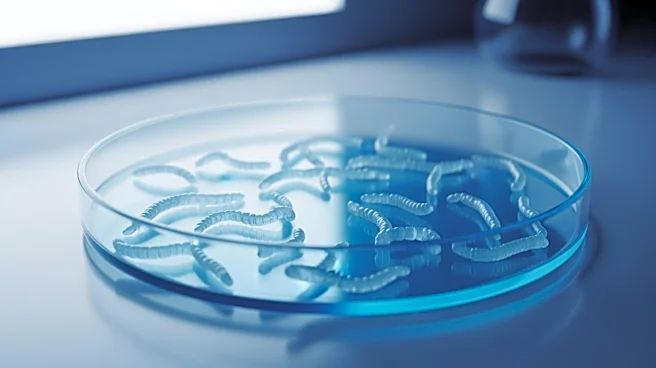
several species of fungi to the cold mountain environment where he died, suggesting they colonized his corpse and remained dormant but viable for millennia. The study, published in the journal Microbiome, indicates that some microbes are not merely dormant relics but may be slowly multiplying in micropockets of moisture within the mummy. This discovery challenges previous assumptions about microbial longevity and activity in ancient remains, highlighting the need for careful consideration during storage and handling of such specimens.
Why It's Important?
The findings offer significant insights into the human microbiome before industrialization, providing a snapshot of ancient gut bacteria that are rare in modern populations but still present in traditional societies. This research could reshape our understanding of microbial communities in ancient environments and their potential impact on health. The study also raises concerns about the preservation of organic remains, as some microbes may thrive in cold environments, potentially affecting the mummy's future safety. Understanding these microbial dynamics could inform conservation strategies for ancient specimens and enhance our knowledge of historical human health and disease.
What's Next?
Future research may focus on further analyzing the microbial communities on Ötzi and other ancient remains to better understand their origins and interactions. Scientists aim to study how these communities change over time, which could provide insights into the microbes present at the time of death. This could lead to broader studies on human and animal remains, particularly bone tissue, which is commonly used in ancient DNA studies. Such research could deepen our understanding of historical microbiomes and their implications for health and disease.
Beyond the Headlines
The study highlights ethical considerations in handling ancient remains, as modern contamination can obscure the true microbial makeup of specimens. It also underscores the importance of interdisciplinary approaches, combining genomic sequencing and microbial culture methods to uncover detailed data. These findings could influence future archaeological and microbiological research, encouraging more comprehensive studies of ancient ecosystems and their preservation.