







What's Happening?
San Francisco police have arrested four individuals and seized over 20,000 counterfeit pills in an investigation following the April overdose death of a 16-year-old boy. The teenager's autopsy revealed the presence of cychlorphine, a synthetic opioid
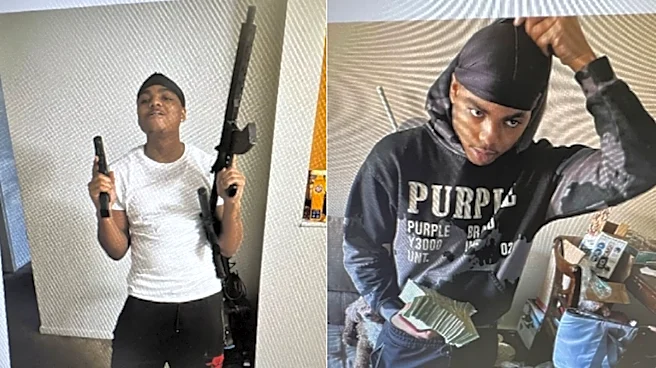
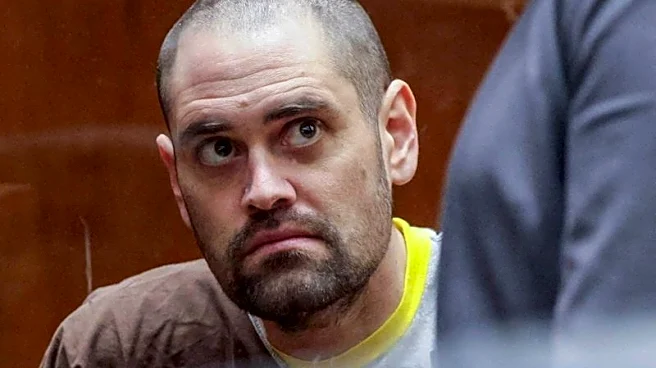
believed to be significantly more potent than fentanyl. At a press conference, Mayor Daniel Lurie, District Attorney Brooke Jenkins, and Police Chief Derrick Lew announced the arrests, which occurred on September 8 and 9, and warned the public about the emergence of cychlorphine in the city's illicit drug supply. The four suspects—Nicholas Wallace, Sharonee Hyson, Leander Pitts, and Starr Lamare—face narcotics and firearms charges. Prosecutors are exploring additional charges, including potentially linking a suspect to the teenager's death, but face a legal hurdle as cychlorphine is not yet specifically listed as a controlled substance under California law. Officials emphasized that standard fentanyl test strips do not detect cychlorphine, and while naloxone can reverse its effects, the precise window for effective treatment is still unknown.
Why It's Important?
This development is critically important for public health and safety in San Francisco and potentially beyond. The emergence of cychlorphine, a highly potent and difficult-to-detect opioid, poses a severe threat to individuals using illicit drugs, particularly given its presence in counterfeit pills that may resemble legitimate medications. The fact that standard fentanyl test strips cannot detect it increases the risk of accidental overdose. The legal challenge of prosecuting cases involving cychlorphine due to its current status as an unscheduled substance highlights a gap in drug legislation that could hinder law enforcement efforts to combat its spread. Mayor Lurie's strong stance on identifying and prosecuting those who sell new deadly drugs signals a proactive approach to the city's ongoing opioid crisis, aiming to prevent a repeat of the fentanyl crisis. The death of a teenager underscores the extreme danger and the need for urgent public awareness and legislative action.
What's Next?
The investigation into the source and distribution of cychlorphine is ongoing, with authorities working to determine if the seized pills contain the substance and whether the suspects knew of its presence. District Attorney Brooke Jenkins has called on the California Legislature to quickly add cychlorphine to the list of controlled substances to facilitate prosecution. Law enforcement will continue efforts to track and interdict the drug, while public health officials will focus on raising awareness about its dangers, especially among vulnerable populations. There will likely be increased efforts to develop better detection methods and refine overdose response protocols for cychlorphine. The legal proceedings against the four arrested individuals will continue, with prosecutors seeking to establish links to the teenager's death and pursue the most severe charges possible. The city will also likely reinforce its broader overdose response strategies, including expanding treatment and stabilization services.
Beyond the Headlines
The emergence of cychlorphine represents a new and alarming phase in the opioid crisis, characterized by increasingly potent and novel synthetic compounds that outpace regulatory and public health responses. This 'arms race' between illicit drug manufacturers and public safety efforts highlights systemic challenges in drug control, including the speed of legislative action, the limitations of current drug testing technologies, and the need for rapid public health advisories. The case also brings to the forefront the issue of counterfeit pills, which are often indistinguishable from legitimate pharmaceuticals but can contain lethal substances, making them particularly dangerous for unsuspecting users. The tragic death of a teenager serves as a stark reminder of the vulnerability of young people to these evolving drug threats, often accessed through social media. This situation calls for a multi-faceted approach involving law enforcement, public health, legislative reform, and community education to address the complex and rapidly changing landscape of illicit drug use.