





What's Happening?
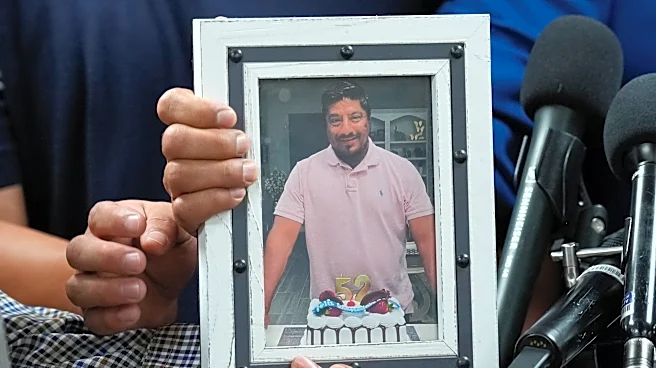
A federal judge has dismissed a lawsuit filed by Navdeep Sharma, an H-1B visa holder stranded in India for 18 months, ruling that the delay in processing his visa application was not legally unreasonable. Sharma, who worked for Tata Consultancy Services
and lived in Texas with his U.S.-citizen family, traveled to India for a visa interview in January 2025. Despite his employer's successful petition to extend his H-1B status, U.S. officials have not issued his visa, citing additional requirements such as medical examinations and social media information. U.S. District Judge Timothy J. Kelly found no grounds to expedite Sharma's case, emphasizing that such action would unfairly prioritize his application over others.
Why It's Important?
This ruling highlights the challenges faced by H-1B visa holders dealing with prolonged processing times, which can disrupt personal and professional lives. The decision underscores the judiciary's reluctance to intervene in visa processing delays, potentially affecting other applicants in similar situations. The case also reflects broader immigration policy trends under the Trump administration, including increased scrutiny and procedural requirements for visa applicants. This could lead to further delays and complications for foreign workers and their employers, impacting industries reliant on skilled international labor.
What's Next?
The court's decision may discourage other visa applicants from pursuing legal action over processing delays, as it sets a precedent for what is considered a reasonable wait time. The Trump administration's ongoing changes to the H-1B program, such as proposed fee increases and a shift to a wage-based selection system, could further complicate the landscape for foreign workers seeking employment in the U.S. Employers and applicants may need to adjust their strategies and expectations in response to these evolving policies.