










What's Happening?
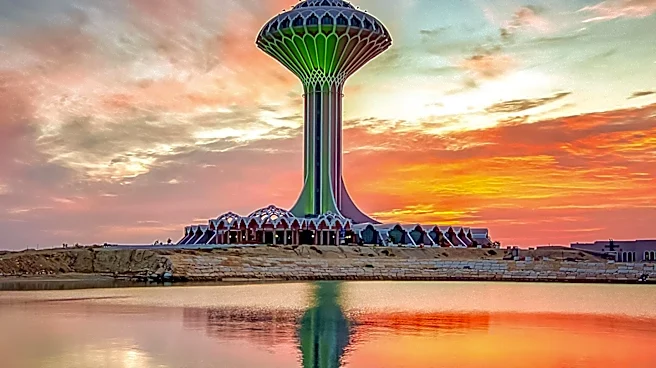
Saudi Arabia, along with other Gulf Cooperation Council (GCC) countries, is leading a shift in urban planning by integrating agriculture and water management into masterplans. This approach moves away from traditional ornamental landscaping towards productive
landscapes that incorporate agriculture, water reuse, and sustainable practices. The 'Journey Through Time Masterplan' in AlUla, Saudi Arabia, exemplifies this trend by treating oasis farming as part of heritage conservation and landscape stewardship. This plan integrates date palm orchards and ecological restoration into tourism and low-carbon mobility strategies. Other projects across the GCC, such as the 'Sustainable City' initiatives in the UAE and Oman, and the use of wadis as urban infrastructure in Qatar and Oman, further illustrate this shift. These projects emphasize the use of treated wastewater and other sustainable water sources to support agriculture and urban development.
Why It's Important?
The integration of agriculture and water management into urban planning in the GCC, led by countries like Saudi Arabia, represents a significant shift towards sustainable development. This approach not only addresses the high costs and environmental impact of traditional landscaping but also enhances food security, water management, and climate resilience. By prioritizing productive landscapes, these projects contribute to economic diversification and reduce reliance on imported food. The use of treated wastewater and other sustainable practices also aligns with global efforts to manage water resources more efficiently. This trend could serve as a model for other arid regions facing similar challenges, promoting a more sustainable and resilient urban development framework.
What's Next?
As these masterplans continue to develop, the focus will likely remain on refining the integration of agriculture and water management. Future steps may include expanding pilot projects, enhancing governance structures, and improving data collection on water usage and crop performance. Stakeholders, including government agencies, developers, and local communities, will need to collaborate closely to ensure the successful implementation and scaling of these initiatives. Additionally, there may be increased investment in research and technology to support sustainable agriculture and water management practices. The success of these projects could influence urban planning policies and practices across the GCC and beyond.
Beyond the Headlines
The shift towards integrating agriculture and water management in GCC masterplans highlights broader implications for urban development and sustainability. This approach challenges traditional notions of urban planning by prioritizing ecological and cultural values alongside economic and infrastructural considerations. It also underscores the importance of interdisciplinary collaboration in addressing complex environmental challenges. By treating agriculture as a core component of urban identity and resilience, these projects contribute to a more holistic understanding of sustainability that balances human needs with environmental stewardship.