






What's Happening?
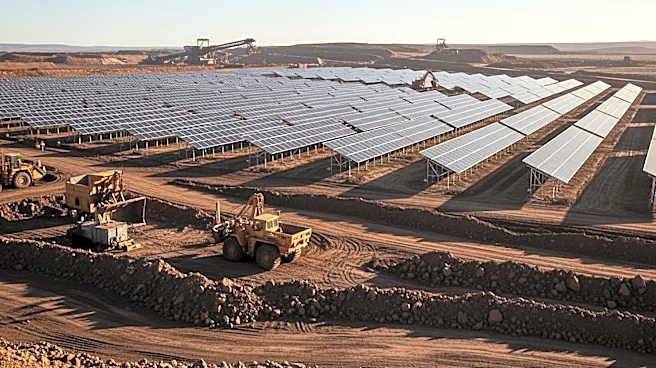
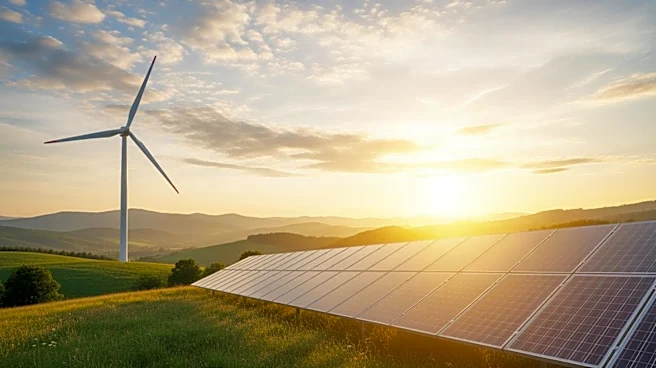
The International Renewable Energy Agency (IRENA) has reported a significant increase in Africa's renewable energy capacity, with a record addition of 11.3 gigawatts in 2025. This growth, which is three times the capacity added in the previous year, is largely
attributed to efforts in South Africa, Egypt, and Ethiopia. The continent's shift towards renewable energy is driven by the decreasing costs of solar and wind technologies, which have become the most affordable sources of new electricity generation in many African markets. Policy changes, such as Ethiopia's ban on internal combustion engine vehicle imports and South Africa's relaxation of private power generation limits, have further accelerated this transition. Despite these advancements, challenges remain, including financial difficulties faced by many African utilities and higher financing costs for renewable projects compared to advanced economies.
Why It's Important?
The rapid expansion of renewable energy in Africa has significant implications for the continent's economic and environmental landscape. By reducing reliance on traditional power sources like coal and large hydropower, African nations can lower their fuel import bills and enhance energy security. The shift to renewables also aligns with global efforts to combat climate change by reducing carbon emissions. For investors, renewable projects offer faster returns and lower exposure to global fuel price fluctuations, making them attractive investment opportunities. However, the financial instability of African utilities and the high perceived risk of investing in the region pose challenges that need to be addressed to sustain this growth.
What's Next?
To continue the momentum in renewable energy development, African countries will need to address the financial challenges facing their utilities and create more bankable projects. Development finance institutions, such as the African Development Bank and the International Finance Corporation, are expected to play a crucial role by providing concessional loans, guarantees, and risk-sharing structures. Additionally, further policy reforms and international cooperation will be essential to attract more investment and support the continent's transition to a sustainable energy future.
Beyond the Headlines
The shift towards renewable energy in Africa is not just an economic or environmental issue but also a matter of social development. Access to affordable and reliable energy can drive economic growth, improve living standards, and reduce poverty. Moreover, the transition to clean energy sources can create new job opportunities in the renewable energy sector, contributing to economic diversification and resilience. However, achieving these benefits will require coordinated efforts from governments, investors, and international organizations to overcome existing barriers and ensure that the energy transition is inclusive and equitable.