







What's Happening?
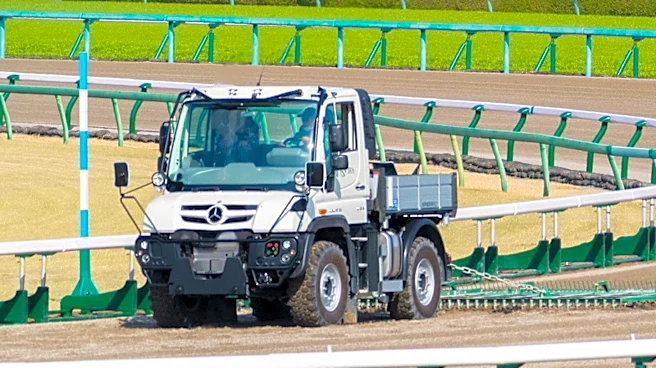
Explosive ordnance disposal specialists in Lower Saxony are actively engaged in recovering explosive ordnance from the two World Wars, utilizing a Unimog U 5023. This vehicle is the third consecutive Unimog employed by the specialists for safely recovering bombs,
shells, mines, and small arms ammunition from the ground. The U 5023 is equipped with a mounted backhoe from Ematec (M213) capable of digging up to six meters deep. A video camera assists the excavator operator in precise underground work, often requiring millimeter accuracy. The excavator cab is reinforced with steel, a special armored glass pane, and side shatter-protection film for safety. The Unimog's tire pressure control system allows it to navigate challenging terrain, including boggy areas, as explosive ordnance from past conflicts remains widespread across the country in fields, moors, near bodies of water, and along the coast.
Why It's Important?
The ongoing recovery of World War-era explosive ordnance in Lower Saxony is crucial for public safety and environmental protection. These unexploded devices pose significant risks to civilians, construction workers, and agricultural operations, as accidental detonation can lead to severe injury or death. The specialized equipment, like the Unimog U 5023 with its reinforced cab and deep-digging capabilities, highlights the advanced measures required for such hazardous work. The presence of these explosives across various landscapes, including agricultural fields and coastal areas, underscores a persistent legacy of past conflicts that continues to impact modern-day land use and development. The continuous efforts of these specialists are vital in mitigating potential disasters and ensuring the safety of communities in affected regions.
What's Next?
The specialists in Lower Saxony will continue their round-the-clock operations to locate and safely recover explosive ordnance. The use of advanced equipment like the Unimog U 5023 is expected to remain central to these efforts, ensuring the safety of the 25-member team and the efficiency of their work. Given the widespread distribution of unexploded ordnance from the World Wars, this recovery work is likely to be a long-term endeavor, requiring sustained resources and specialized expertise. Ongoing technological advancements in detection and disposal methods may further enhance the safety and effectiveness of these operations in the future, as the region continues to address the historical remnants of conflict.
Beyond the Headlines
The persistent challenge of unexploded ordnance from the World Wars in Lower Saxony reflects a broader global issue where historical conflicts leave lasting physical dangers. This situation highlights the long-term societal and environmental costs of war, extending far beyond the immediate cessation of hostilities. The dedication of explosive ordnance disposal teams underscores a critical, often unseen, public service that safeguards communities from latent threats. Furthermore, the specialized engineering of vehicles like the Unimog U 5023 for such dangerous tasks illustrates the continuous innovation required to address complex humanitarian and safety challenges. This ongoing effort serves as a stark reminder of the enduring impact of historical events on contemporary life and the necessity of specialized expertise in mitigating these risks.