
What's Happening?
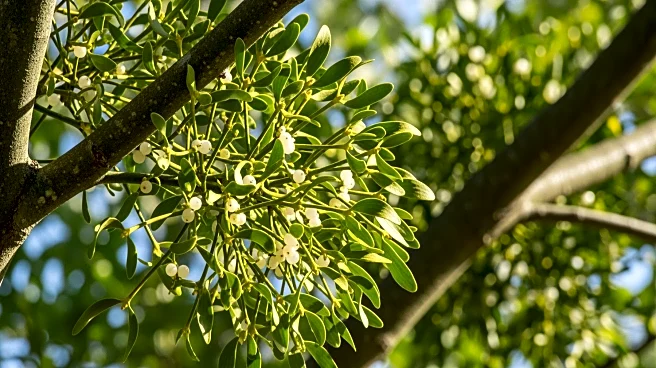
Research led by Oregon State University has found that mistletoe, traditionally viewed as a parasitic plant, does not harm its host trees. The study surveyed urban forests in seven western Oregon cities,
revealing no negative health impacts on trees infested with mistletoe. The findings suggest that mistletoe may actually benefit urban wildlife, providing food and habitat. The research focused on western oak mistletoe, which primarily affects oak trees but can also be found on other species. The study highlights the ecological role of mistletoe and its cultural significance during the holiday season.
Why It's Important?
This research challenges the negative perception of mistletoe, highlighting its ecological benefits and role in urban biodiversity. By understanding the plant's interactions with its environment, urban forest managers can make informed decisions about tree planting and maintenance. The study also underscores the importance of preserving biodiversity in urban areas, where diverse plant and animal species contribute to ecological resilience and environmental health.