




What's Happening?
Representative Stephanie Bice, the Republican incumbent for Oklahoma's 5th Congressional District, has formally declined a debate proposal for the upcoming November 3 congressional election. Her campaign confirmed this decision on September 29, 2026,
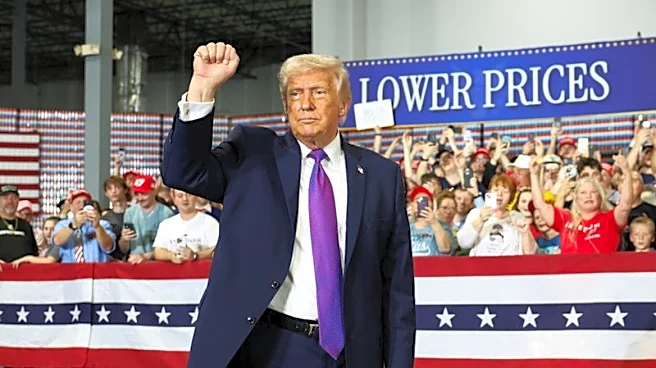
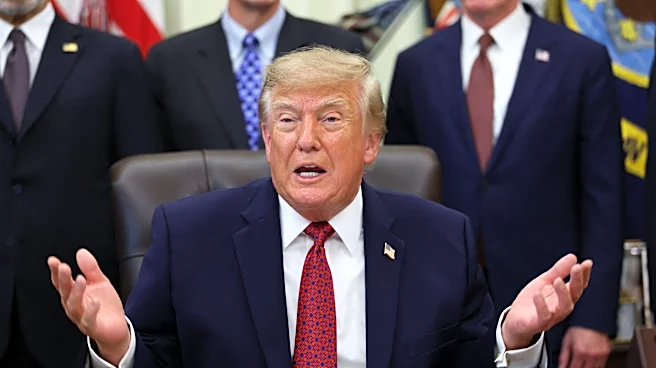
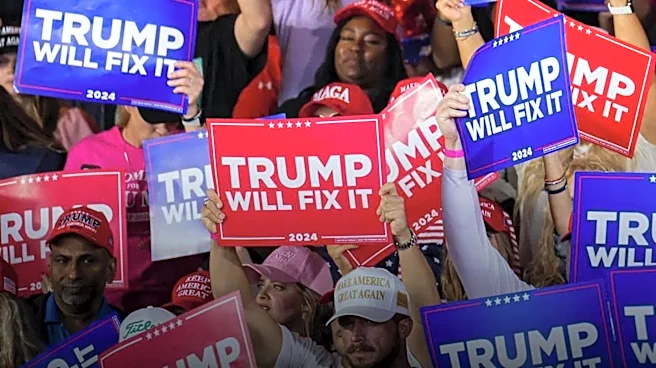
citing issues with an opponent's financial filing status. Bice's campaign stated a preference for focusing on community events and direct voter engagement rather than participating in a televised debate. Bice is seeking a fourth term in Congress and faces Democratic candidate Jena Nelson, along with independent candidates Robert P. Henri and Austin Nieves. Nelson previously secured 43 percent of the vote in the 2022 election. The refusal to debate comes amidst a high-stakes campaign cycle, with Bice having won her 2020 election with 52 percent of the vote. Challenger Jena Nelson recently reported $40,000 in campaign debt in a Federal Election Commission filing. President Trump is also scheduled to hold a campaign event in Durant on October 1, 2026, which is expected to draw several Oklahoma federal politicians, including Bice.
Why It's Important?
The decision by Rep. Stephanie Bice to decline a debate proposal is significant as it limits direct public comparison between candidates in Oklahoma's 5th Congressional District. Debates offer voters a structured forum to assess candidates' positions, demeanor, and ability to articulate their platforms under pressure. By opting out, Bice's campaign prioritizes direct voter engagement, which could be seen as a strategy to control the narrative and avoid potentially challenging exchanges with opponents. This move is particularly notable given that national Democrats are reportedly making a late push to support Jena Nelson's campaign with funding and staff, suggesting the race is gaining attention despite Oklahoma being a traditionally Republican state. The Bice campaign's stated reason, issues with an opponent's financial filing status, highlights how campaign finance can become a strategic point of contention in elections. The absence of a debate could mean voters will rely more heavily on individual campaign messaging, community events, and independent analysis of candidate statements and financial filings to make their informed choices.
What's Next?
With Rep. Stephanie Bice declining the debate, voters in Oklahoma's 5th Congressional District will have fewer opportunities to see candidates interact in a moderated forum before the November 3 election. The focus will likely shift to individual campaign events, town halls, and other community engagements where candidates can directly address constituents. Voters are encouraged to monitor official candidate platforms and review campaign financial filings and statements independently to make an informed decision. The upcoming campaign event featuring President Trump in Durant on October 1, 2026, will also be a key moment, potentially influencing the dynamics of the race, especially for Republican candidates like Bice who are expected to attend. The outcome of this election could contribute to the broader balance of power in the U.S. House, as national Democrats are reportedly investing in the race, suggesting a belief that the seat could be competitive.
Beyond the Headlines
The refusal of an incumbent to debate, particularly citing an opponent's financial status, can have deeper implications for democratic processes and voter engagement. It raises questions about the role of debates in modern elections and whether candidates are increasingly opting for controlled environments over direct, unscripted confrontations. This strategy might be perceived by some as a way to avoid scrutiny or difficult questions, potentially eroding public trust in the electoral process. Furthermore, the emphasis on 'direct voter engagement' over debates could signify a shift in campaign tactics, where personalized outreach and community events are deemed more effective than traditional media forums. This trend could also exacerbate the challenge for voters to access comprehensive, comparative information about candidates, especially in districts where media coverage might be limited. The use of an opponent's financial filing status as a reason to decline a debate also underscores the increasing weaponization of administrative details in political campaigns, potentially diverting attention from substantive policy discussions.