
What's Happening?
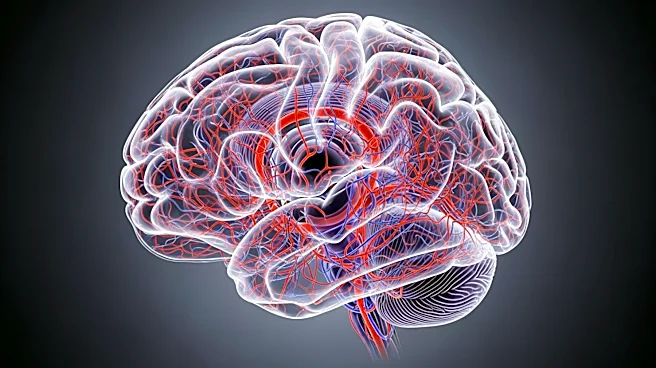
Recent research conducted by the University of Central Florida indicates that movement-related symptoms of Alzheimer's disease may originate in the peripheral nervous system rather than the brain. The
study utilized 'human-on-a-chip' technology to demonstrate that genetic mutations associated with familial Alzheimer's can directly damage the connection between nerves and muscles, independent of the brain or spinal cord. This finding challenges the traditional understanding that Alzheimer's symptoms are primarily caused by brain decay. The research was led by Professor James Hickman and Research Professor Xiufang 'Nadine' Guo, in collaboration with healthcare tech company Hesperos. The study was published in Alzheimer's & Dementia: The Journal of the Alzheimer's Association.
Why It's Important?
This research could significantly alter the approach to diagnosing and treating Alzheimer's disease. By identifying that movement issues may stem from the peripheral nervous system, it suggests that current treatments targeting brain plaques and tangles might not address all symptoms effectively. This insight could lead to new therapeutic strategies focusing on the nerve-to-muscle connection, potentially improving patient outcomes. Additionally, the study highlights the importance of maintaining motor function for overall brain health, as physical activity is known to support cognitive well-being. The findings may also prompt further research into the role of the peripheral nervous system in other neurodegenerative diseases.
What's Next?
The researchers believe their approach will become increasingly important as drug developers seek more accurate ways to study human disease. The 'human-on-a-chip' technology offers a more realistic model for studying disease progression, which could lead to better treatments. Future research may focus on developing therapies that target the peripheral nervous system to address movement issues in Alzheimer's patients. Additionally, the study may encourage further exploration into the early detection of motor deficits as potential indicators of Alzheimer's, allowing for earlier intervention and possibly delaying the onset of cognitive symptoms.
Beyond the Headlines
The study's use of 'human-on-a-chip' technology represents a significant advancement in disease modeling, offering a more accurate representation of human biological functions than traditional animal models. This approach could revolutionize how researchers study neurodegenerative diseases, providing insights that are more applicable to human conditions. The findings also raise ethical considerations regarding the focus of Alzheimer's treatments, suggesting a need to reevaluate current therapeutic strategies to ensure they address all aspects of the disease.