




What's Happening?
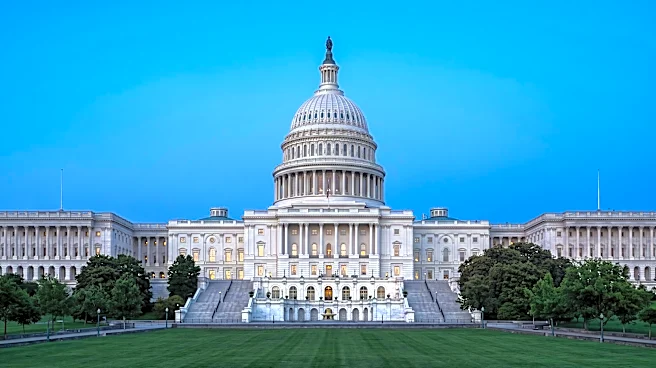
The House of Representatives has passed the Protect Economic and Academic Freedom Act, a bill that could jeopardize federal funding for universities found to be engaging in certain boycotts of Israel. The legislation, introduced by Reps. Virginia Foxx
(R-N.C.) and Josh Gottheimer (D-N.J.), defines a prohibited action as a “nonexpressive commercial boycott” of Israel, including refusing to deal or terminating business relationships without a “valid business reason.” Universities receiving federal funds would be required to annually certify that they provide students and faculty access to academic programs in Israel on the same terms as programs in other countries. The bill passed with a vote of 237-169, with 33 Democrats voting against their party line and two Republicans, Reps. Thomas Massie (R-Ky.) and Warren Davidson (R-Ohio), opposing the measure. Critics argue the bill targets the Boycott, Divest, and Sanction (BDS) movement, which supporters claim contributes to rising antisemitism on campuses.
Why It's Important?
This legislation carries significant implications for academic freedom and free speech on U.S. university campuses. Opponents argue that the bill could chill political expression and extend anti-boycott protections to Israeli settlements in occupied territories, potentially forcing universities to actively seek cooperation with Israel to avoid legal action. The Foundation for Middle East Peace President, Lara Friedman, stated that the bill could erode First Amendment protections for the right to boycott. The bill's language, particularly the term “nonexpressive commercial boycott,” draws from a 2022 Eighth Circuit ruling that deemed boycotting as nonexpressive conduct not protected by the First Amendment, while calling for a boycott remains protected speech. This distinction is crucial as it could set a precedent for how boycotts are legally viewed and regulated in the U.S., impacting various advocacy movements beyond the Israeli-Palestinian conflict.
What's Next?
The bill now moves to the Senate for consideration. If it passes the Senate and is signed into law, universities will face new compliance requirements and potential legal challenges. Institutions would need to implement annual certification processes regarding their engagement with Israel, which could lead to increased scrutiny and potential lawsuits from politically motivated groups. The debate surrounding the bill is likely to continue, with civil liberties organizations and academic groups potentially challenging its constitutionality, particularly concerning its impact on free speech and academic autonomy. The Supreme Court has previously declined to hear challenges to similar state-level anti-BDS laws, indicating a complex legal landscape for such legislation.
Beyond the Headlines
Beyond the immediate impact on federal funding and university policies, this bill touches upon deeper constitutional questions regarding the scope of the First Amendment and the right to boycott. The classification of boycotts as “nonexpressive conduct” could have far-reaching consequences, potentially limiting forms of protest and advocacy that rely on economic pressure. This legislative effort reflects a broader trend of state and federal actions aimed at countering the BDS movement, raising concerns about the weaponization of anti-boycott laws to suppress dissent. The debate also highlights the ongoing tension between protecting free speech and addressing concerns about antisemitism on college campuses, a complex issue with significant cultural and political dimensions in the U.S.