









What's Happening?
Prosper Global, previously known as Mercy Corps, has implemented a multi-agent AI system named VERA to significantly reduce the time required for research in conflict-affected regions. This AI system, developed with Cloudera and operating on AWS with Anthropic
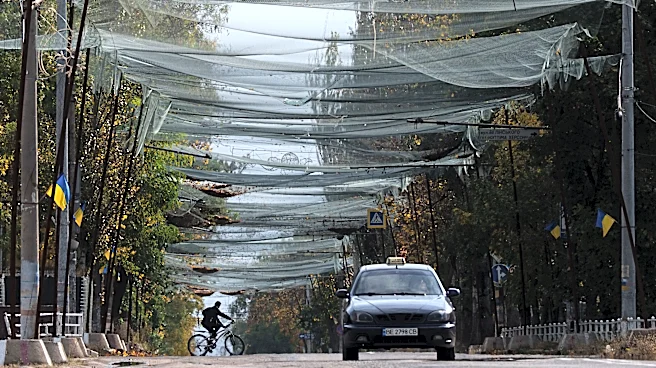
models, employs specialized agents to gather data from various sources, including ReliefWeb, the ACLED conflict tracker, and local news outlets. A final agent then compiles these findings into a preliminary report, which human analysts subsequently refine. Aaron Eubank, the director of data science at Prosper Global, emphasized that VERA's output serves as a foundational draft rather than a finished document, ensuring that human researchers maintain control and oversight. The system has been deployed in several countries, including Sudan, Colombia, the Democratic Republic of Congo, and Ukraine. In Sudan, VERA reduced the desk research time for an agricultural report from five or six days to just two, resulting in an estimated saving of $1,500. Similarly, in Colombia, a staff member without prior security expertise was able to generate an election security report within a few hours using the tool.
Why It's Important?
The adoption of VERA by Prosper Global marks a significant advancement in humanitarian aid operations, particularly in the efficiency and speed of crisis response. By drastically cutting down research time, the organization can gain quicker insights into complex situations, enabling more timely and informed decision-making in volatile environments. This increased efficiency can lead to more effective allocation of resources and better-tailored interventions for vulnerable populations. The cost savings associated with reduced research hours can also free up funds for direct aid and program implementation. Furthermore, the ability for staff without specialized backgrounds to produce comprehensive reports quickly democratizes access to critical information, potentially broadening the scope of individuals who can contribute to crisis analysis. This technological integration highlights a growing trend of humanitarian organizations leveraging advanced tools to enhance their operational capabilities and impact in challenging global contexts.
What's Next?
Prosper Global is implementing VERA with a measured rollout, acknowledging that the risks and operational considerations vary significantly across different locations. This cautious approach suggests that the organization will likely continue to evaluate the system's performance and adapt its deployment strategies based on specific regional needs and challenges. Future developments may include expanding VERA's capabilities to analyze a wider array of data types or integrating it with other operational tools to create a more seamless information flow. The success of VERA in reducing research times and costs could also encourage other humanitarian organizations to explore similar AI-driven solutions, potentially leading to a broader adoption of such technologies across the sector. As the system gathers more data and its algorithms are refined, its accuracy and utility in providing actionable intelligence for humanitarian efforts are expected to improve, further enhancing crisis response mechanisms.
Beyond the Headlines
The deployment of AI tools like VERA by humanitarian organizations raises important ethical and operational considerations beyond immediate efficiency gains. While the system is designed to assist human analysts, questions about data accuracy, potential biases in AI-generated summaries, and the critical need for human oversight remain paramount. Ensuring that the AI does not inadvertently perpetuate or amplify existing biases present in its data sources is crucial for maintaining objectivity and trust. Furthermore, the reliance on AI for initial assessments in conflict zones necessitates robust validation processes to prevent misinterpretations that could have severe consequences. The balance between technological advancement and the irreplaceable human element of empathy, nuanced understanding, and on-the-ground verification will be a continuous challenge. This development also underscores the evolving nature of humanitarian work, where technological literacy and data science skills are becoming increasingly vital alongside traditional aid expertise.