







What's Happening?
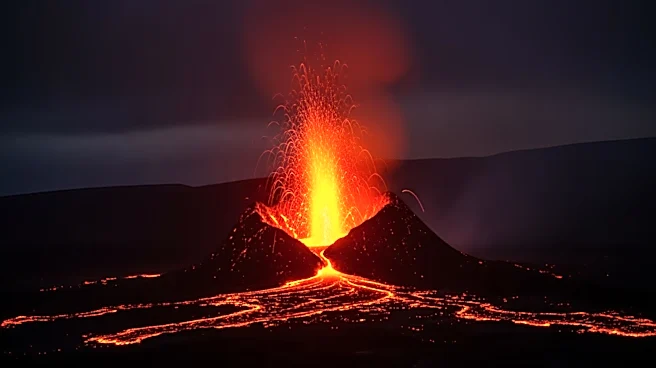
Hawaii's Kilauea volcano erupted early Thursday morning, marking its 45th eruptive episode since December 2024. The eruption sent lava fountains soaring 1,000 feet into the air, with smoke reaching altitudes of 16,500 feet. The United States Geological
Survey (USGS) reported that the eruption began after lava started to emerge from the volcano's caldera earlier in the week. The eruption poses standard volcanic hazards, including volcanic gas and tephra, but currently does not threaten nearby communities. The affected area is within the Hawaii Volcanoes National Park, which has been closed since 2007.
Why It's Important?
Kilauea is one of the world's most active volcanoes, and its frequent eruptions are significant for both scientific study and public safety. The eruptions can impact air travel due to ash clouds and pose health risks from volcanic gases and tephra. The ongoing volcanic activity is a reminder of the dynamic geological processes at play in Hawaii and the need for continuous monitoring and preparedness. The eruptions also attract scientific interest and tourism, contributing to the local economy while necessitating robust safety measures.
What's Next?
The USGS and local authorities will continue to monitor Kilauea's activity closely. Residents and visitors in the area will be advised to stay informed about potential air quality issues and other hazards. The Hawaii Volcanoes National Park remains closed to the public in the affected areas, and any changes in volcanic activity could lead to further closures or evacuations. Scientists will likely use this opportunity to study the eruption patterns and gather data to improve predictive models for future volcanic events.