
What's Happening?
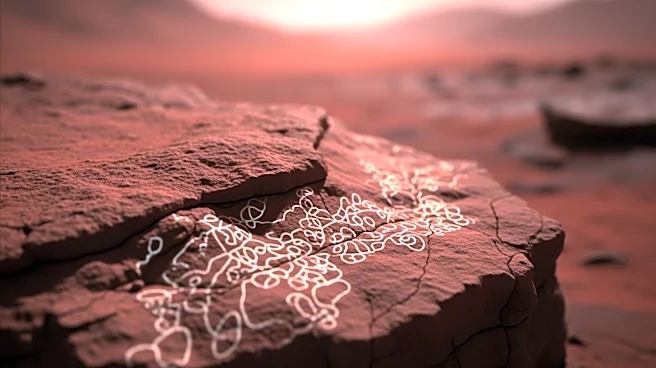
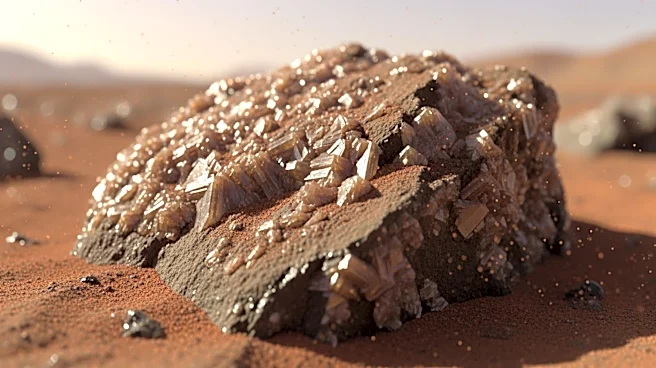
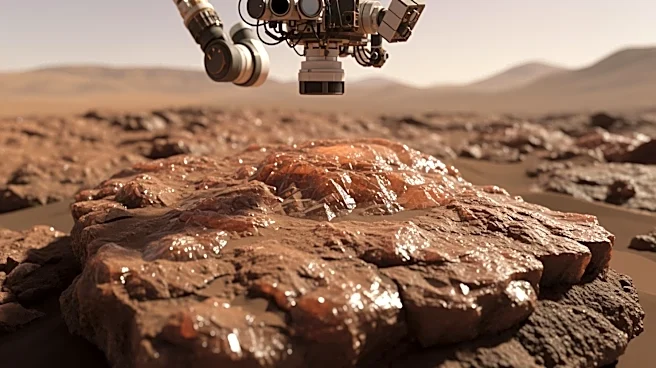
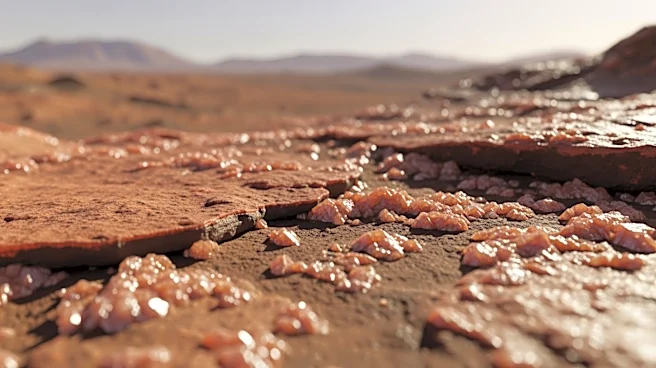
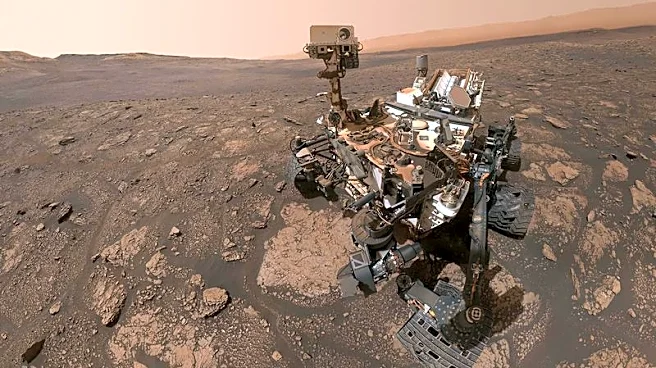
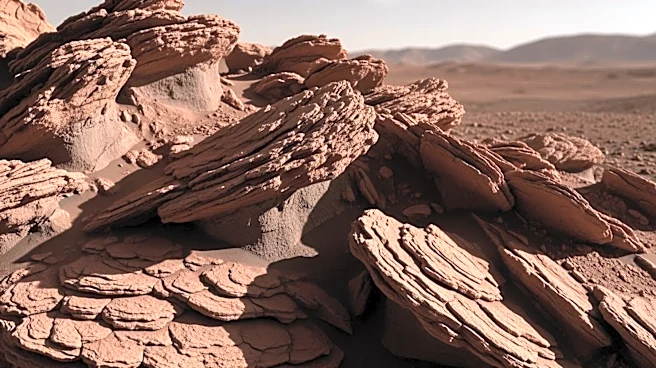
NASA's Curiosity rover has captured images of unusual rock formations on Mars that resemble giant reptile scales. These formations, located near the Antofagasta crater in the Gale crater, have sparked
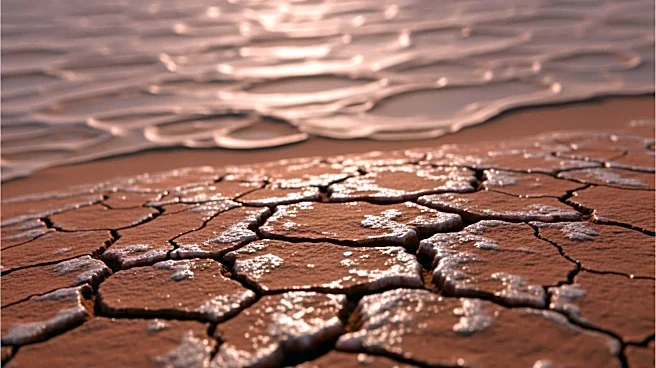
interest due to their abundance and unique polygonal shapes. The rover's images, taken in early April, show these formations stretching across the Martian surface. Scientists are investigating the origins of these formations, which may be linked to ancient water activity on Mars. The discovery adds to the growing body of evidence suggesting that Mars once had conditions suitable for liquid water.
Why It's Important?
The discovery of these formations is significant as it provides further evidence of Mars' geological history and the potential for past water activity. Understanding the planet's past environment is crucial for determining its habitability and the possibility of past life. The findings could influence future Mars exploration missions and the search for signs of life. Additionally, the study of these formations may offer insights into similar geological processes on Earth, enhancing our understanding of planetary science.
What's Next?
NASA scientists will continue to analyze the data collected by Curiosity to determine the exact nature and formation process of these rock formations. This may involve comparing the Martian formations to similar structures on Earth and conducting further chemical analyses. The results could guide future missions to Mars, particularly those focused on astrobiology and the search for past life. The ongoing exploration of Mars by rovers like Curiosity and Perseverance will continue to provide valuable data for scientists.