





What's Happening?
On the 78th day of the ongoing conflict, Iran and the U.S. have signaled a willingness to engage in talks, as a fragile ceasefire between Israel and Lebanon is extended by 45 days. Iran's Foreign Minister Abbas Araghchi indicated that the U.S. has shown
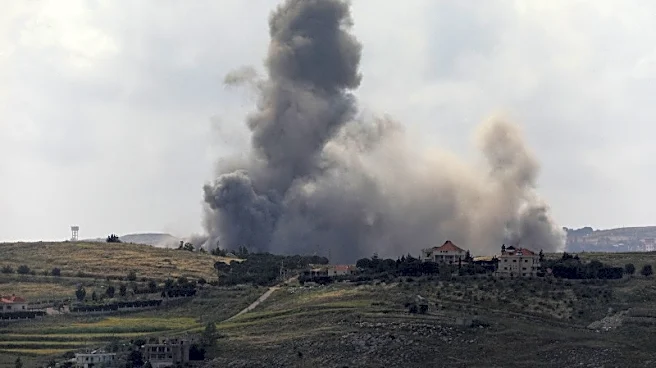
openness to negotiations, although a deadlock remains over Iran's nuclear program. President Trump has suggested a potential agreement where Iran would halt its civilian nuclear program for two decades. Meanwhile, the conflict has resulted in significant casualties and damage in Iran, with over 1,260 people killed and thousands injured. The extension of the Lebanon truce offers a temporary reprieve in the region.
Why It's Important?
The potential for renewed negotiations between the U.S. and Iran could lead to a de-escalation of tensions and a resolution to the conflict. The extended ceasefire in Lebanon provides an opportunity for diplomatic efforts to take hold and prevent further violence. However, the deadlock over Iran's nuclear program remains a significant hurdle. The situation has broader implications for regional stability and international relations, particularly involving key players like China and Russia. The outcome of these talks could influence global energy markets and geopolitical dynamics in the Middle East.