
What's Happening?
The tragic events of 1847 at Grosse Île are directly linked to the Great Irish Famine, a pivotal and traumatic period in Irish history. During this decade, Ireland's population decreased by over 2 million
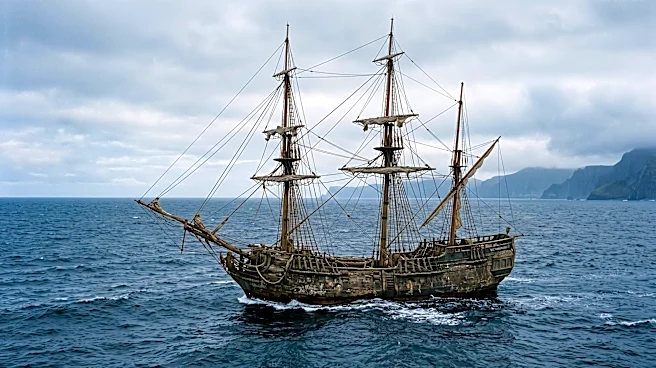
people; half succumbed to hunger, disease, and malnutrition, while the other half emigrated. The Great Famine, which spanned from 1845 to 1848-1849, reached its peak in 1847. At the port of Quebec and Grosse Île, the situation became dire as over 100,000 immigrants had to be accommodated in a single season, a significant increase from the average of 25,000 to 30,000 in previous years. These immigrants, predominantly Irish and already weakened by malnutrition and famine, were crammed onto unsanitary sailing ships unfit for human transport. They arrived in deplorable conditions, many suffering from typhus, which rapidly escalated into an epidemic. In 1847, 398 ships were inspected at Grosse Île, and 441 were registered in Quebec, with 77 carrying over 400 passengers each. Liverpool was the primary departure port, followed by Limerick, Cork, Glasgow, Dublin, Sligo, Bremen, and Belfast. The average crossing time was 45 days, but 26 ships took over 60 days to reach Grosse Île. Quarantine stops typically lasted 6 days, though many ships remained for over 20 days.
Why It's Important?
The Great Irish Famine and the subsequent mass emigration to places like Canada highlight the devastating impact of food scarcity and disease on a population. The historical account from Grosse Île illustrates the severe humanitarian crisis that unfolded, with thousands dying at sea, in quarantine, and in Canadian cities. This event significantly shaped the demographics of Ireland, whose population today remains lower than in 1841. It also underscores the challenges faced by host nations in managing large-scale immigration during times of crisis, particularly concerning public health and infrastructure. The influx of sick and malnourished individuals strained existing quarantine facilities and medical personnel, leading to widespread disease outbreaks. The historical context serves as a stark reminder of the interconnectedness of global events and the long-lasting consequences of famine and forced migration on both the affected populations and the receiving communities.
What's Next?
While the immediate crisis of the 1847 famine is historical, its legacy continues to influence discussions on global food security, immigration policies, and public health preparedness. The historical record of Grosse Île serves as a significant site for remembrance and education, emphasizing the importance of humanitarian responses to crises. Future considerations might involve continued research into historical migration patterns and their societal impacts, as well as the development of international frameworks for managing large-scale humanitarian movements. The lessons learned from such historical events can inform contemporary approaches to disaster relief, refugee assistance, and global health initiatives, aiming to prevent similar tragedies and ensure more humane and effective responses to future crises.
Beyond the Headlines
The events of 1847 extend beyond a simple historical account of famine and emigration; they reveal profound ethical and societal implications. The conditions aboard the ships, described as unsanitary and unfit for human transport, raise questions about the responsibility of authorities and ship owners during such desperate times. The overwhelmed quarantine facilities at Grosse Île highlight the systemic unpreparedness for a crisis of that magnitude, leading to further suffering and death. This period also underscores the resilience of those who survived, contributing to the diaspora that shaped the cultural landscape of countries like Canada. The memory of the Great Famine and the experiences at Grosse Île serve as a powerful narrative in understanding the human cost of socio-economic and environmental disasters, influencing collective memory and identity for generations. It also prompts reflection on the moral obligations of nations to assist those fleeing dire circumstances.