






What's Happening?
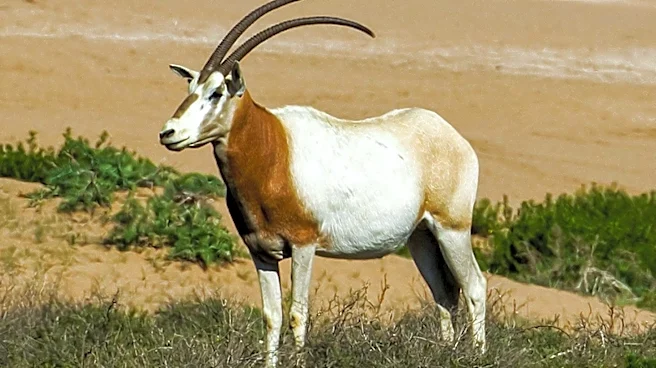
University of Maryland researchers have partnered with the Smithsonian’s National Zoo and Conservation Biology Institute (NZCBI) to assess the long-term success of the scimitar-horned oryx reintroduction program. This antelope species, once declared functionally
extinct in the wild in 2000 by the International Union for Conservation of Nature, was downlisted to 'endangered' status after a global coalition of governments, conservation organizations, and scientists successfully reintroduced them from captivity. Since 2016, nearly 350 scimitar-horned oryx from a captive breeding herd managed by the Environment Agency-Abu Dhabi have been released into the Réserve de Faune de Ouadi Rimé-Ouadi Achim in central Chad. The wild population now numbers between 650-900, with most animals born in Chad. The research aims to determine if the reintroduced oryx have changed in terms of social behavior or migratory knowledge from their original wild versions, and how they are adapting to their natural habitats after generations in captivity.
Why It's Important?
This research is important because it investigates the long-term consequences and behavioral adaptations of a species successfully brought back from the brink of extinction in the wild. The scimitar-horned oryx reintroduction is considered one of conservation's best success stories, making it a crucial case study for future wildlife reintroduction efforts globally. Understanding how animals that have spent generations in captivity learn to be wild again, including the reformation of social bonds and the development of social structures, provides invaluable insights for conservation biology. The findings will inform strategies for managing reintroduced populations, ensuring their sustained survival and ecological integration. This collaboration between the University of Maryland and the Smithsonian highlights the critical role of scientific research in evaluating conservation outcomes and refining approaches to species recovery, offering lessons applicable to other endangered species programs worldwide.
What's Next?
University of Maryland researchers, in collaboration with the Smithsonian’s National Zoo and Conservation Biology Institute, will continue to study the scimitar-horned oryx population in Chad. The research will focus on analyzing the social dynamics and migratory patterns of the reintroduced oryx, particularly how they construct and maintain social structures in a wild environment after being absent for so long. This ongoing assessment will provide critical data on the behavioral ecology of the species and its adaptation to natural habitats. The findings are expected to contribute to a deeper understanding of reintroduction biology and inform best practices for future conservation projects. The success of this program could serve as a model for other species recovery efforts, potentially leading to more ambitious and effective reintroduction initiatives for other endangered animals globally.
Beyond the Headlines
The reintroduction of the scimitar-horned oryx and the subsequent research delve into profound questions about the nature of 'wildness' and the capacity for species to recover from human-induced extinction. It challenges the notion that once a species is extinct in the wild, its natural behaviors are irrevocably lost. The study of how these oryx 'construct a society from scratch' after generations in captivity offers unique insights into animal social learning, instinct versus learned behavior, and the resilience of ecological systems. This project transcends typical conservation efforts by exploring the nuanced interplay between genetics, environment, and behavior in the context of species recovery. It underscores the ethical and practical complexities of de-extinction and rewilding, providing a scientific basis for understanding the long-term viability and true ecological integration of reintroduced populations, ultimately shaping our approach to biodiversity preservation.