
What's Happening?
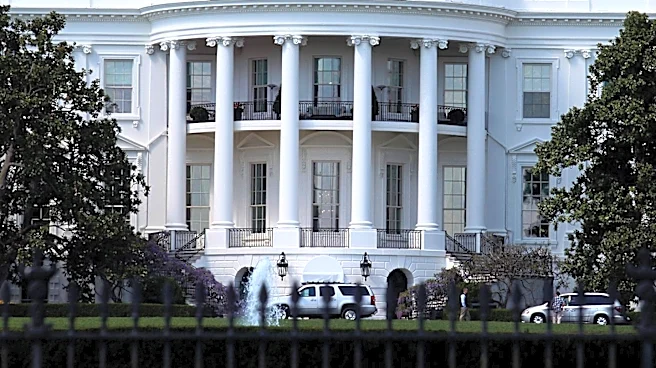
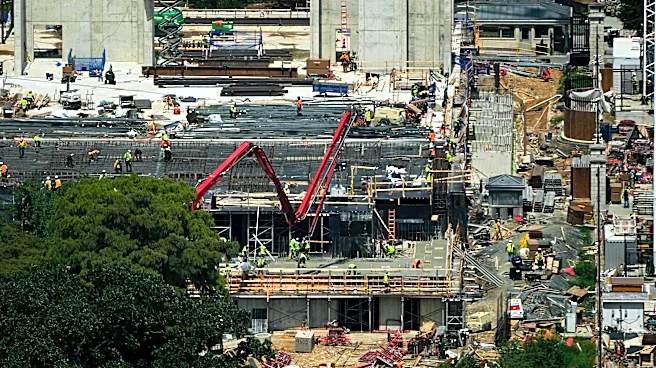
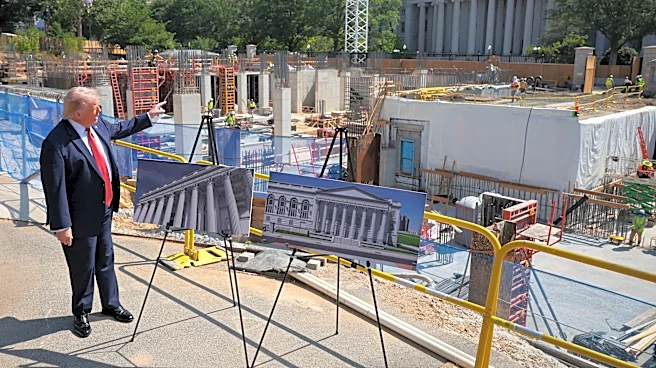
The Trump administration has made an urgent appeal to the Supreme Court to halt an injunction that would stop most above-ground construction of a new 90,000-square-foot ballroom at the White House East
Wing. President Trump unilaterally initiated the demolition of the East Wing in late 2025 to make way for this project. Solicitor General John Sauer, representing the administration, argues that the project is a 'military complex' vital for national security, providing a 'safe room' for the Presidency and ensuring continuity of government. The administration claims that seeking congressional approval for the construction, as federal law typically requires for federal property, would infringe upon presidential power. They assert that the project is 65% complete, with a 250-person crew working extensively to finish it, and that judges lack the authority to question decisions deemed necessary for national security. The injunction is set to take effect in three days, prompting this final appeal.
Why It's Important?
This case highlights a significant constitutional dispute regarding the separation of powers between the executive and legislative branches, specifically concerning control over federal property and presidential authority. The administration's argument that the ballroom is a 'military complex' and a national security imperative attempts to bypass congressional oversight, potentially setting a precedent for future presidential actions on federal property. The National Trust for Historic Preservation, which brought the case, views this as an attempt by President Trump to unilaterally override Congress and outrun judicial review. If the Supreme Court sides with the administration, it could expand presidential power in matters of federal property and construction, potentially diminishing Congress's traditional role in overseeing such projects. Conversely, upholding the injunction would reinforce congressional authority and the checks and balances system.
What's Next?
The Supreme Court is expected to issue a decision on the stay by the end of the week, coinciding with when the injunction is scheduled to take effect. The Court could either grant the stay, allowing construction to continue, or deny it, enforcing the halt on above-ground work. There is also a possibility that the justices could issue an administrative order to buy more time to consider the complex legal and constitutional issues at stake. Regardless of the immediate decision on the stay, the administration is ultimately seeking for the Supreme Court to hear and dismiss the entire case, which would definitively resolve the dispute over congressional approval for the project. The National Trust for Historic Preservation will likely continue to argue against the administration's claims, emphasizing the importance of congressional oversight.
Beyond the Headlines
The dispute extends beyond the immediate construction project, touching upon fundamental questions of presidential power, national security justifications, and the role of judicial review. The administration's assertion that a 'visual dislike' of the project is insufficient grounds for a challenge raises concerns about limiting public and organizational oversight of government actions, particularly those involving significant alterations to national landmarks. The argument that allowing such challenges would 'open the floodgates to endless challenges' could be seen as an attempt to curtail citizen and advocacy group participation in preserving historical and public assets. This case could influence future interpretations of federal law regarding presidential authority over federal property and the scope of judicial intervention in executive decisions, especially when national security is invoked.