








What's Happening?
On October 20th, residents and advocates in Virginia Beach participated in the Hampton Roads march against data centers, held at Virginia Beach Town Center. This event, sponsored by organizations including the CCAN Action Fund, the Virginia League of
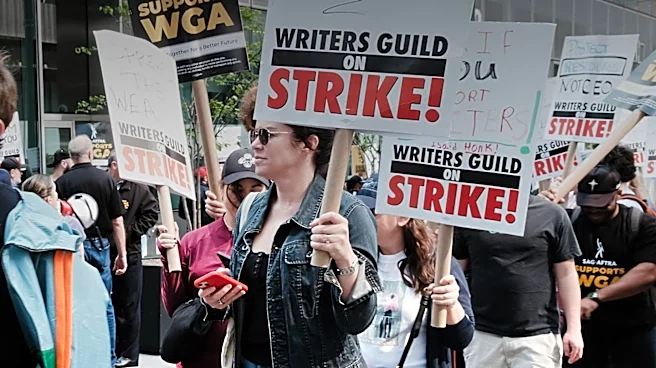
Conservation, the Coastal Virginia Sierra Club, COVA, and the Center for Sustainable Communities, called for an immediate statewide moratorium on new data center approvals in Virginia. Organization leaders and speakers, such as Catherine Setaro, Melissa Lukeson, Garry Harris, and Michael Jamieson, addressed the attendees. Participants held 'Moratorium Now' flags and anti-data center signs, highlighting local concerns about the rapid expansion of data centers. Similar marches have previously taken place in other Virginia localities, including Culpeper, Winchester, Leesburg, and Danville, indicating a growing statewide movement.
Why It's Important?
The march underscores significant environmental and infrastructural concerns stemming from the rapid expansion of data centers across Virginia. The commonwealth's role as a major hub for data centers, driven by its proximity to internet exchange points and favorable business environment, is placing increasing pressure on critical resources. Specifically, the demand for electricity and water by these facilities is a primary concern, potentially straining local grids and water supplies. This movement reflects a broader public and environmental advocacy push to balance economic development with sustainable resource management. The call for a moratorium suggests a desire for policymakers to reassess current regulations and implement stronger safeguards to protect communities and natural resources from the impacts of intensive data center operations.
What's Next?
The campaign aims to prompt policymakers to establish new laws and greater protections for residents before approving additional energy- and water-intensive data facilities. The immediate goal is a statewide moratorium, which would provide a pause for legislative review and the development of more comprehensive regulatory frameworks. This could lead to legislative proposals at the state level to address the environmental and resource impacts of data centers. Stakeholders, including environmental groups, community advocates, and potentially local government officials, will likely continue to lobby state legislators and regulatory bodies. The outcome of these efforts could influence future economic development strategies in Virginia, particularly regarding the technology sector and infrastructure planning.
Beyond the Headlines
The debate over data center expansion in Virginia highlights a complex tension between economic growth and environmental sustainability. While data centers bring significant investment and job creation, their substantial energy and water consumption raise questions about long-term ecological footprints and resource equity. This issue extends beyond Virginia, as many states grapple with the environmental costs of supporting the digital economy. The movement for a moratorium could set a precedent for how other regions approach the regulation of high-impact industries. It also reflects a growing public awareness and demand for corporate responsibility and sustainable development practices, potentially influencing investment decisions and corporate siting strategies in the tech industry.