
What's Happening?
Indiana Governor Mike Braun announced a new state-led nuclear energy program and that Indiana will become a Nuclear Regulatory Commission (NRC) Agreement State. This partnership, formalized with NRC Chair
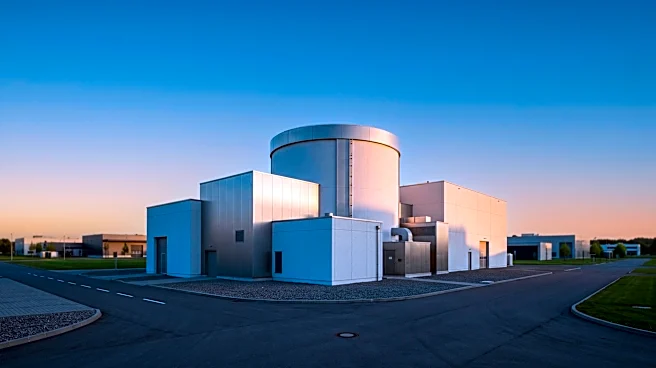
Ho Nieh, is considered a major milestone for Indiana's commitment to energy reliability and affordability. As an Agreement State, Indiana will assume regulatory authority over certain radioactive materials used in medical, academic, and industrial settings, effective September 30. This means permit review times will be faster, customer service will improve, incident responses will be quicker, and regulatory fees will be lower, as decisions will be made in Indiana rather than Washington. Governor Braun emphasized that state control provides certainty, speed, and efficiency, which is crucial as electricity demand accelerates. He also noted that President Trump has prioritized building the U.S. nuclear energy sector, and this agreement is a 'big opportunity' for Indiana to increase supply and lower prices for Hoosiers. Indiana has been working on this NRC agreement for over four years, preparing infrastructure and personnel. The state has also been actively pursuing nuclear power, with First American Nuclear planning to bring its headquarters and manufacturing facilities for small modular reactors (SMRs) to Indiana.
Why It's Important?
This initiative is pivotal for Indiana's energy future, aiming to enhance energy reliability, affordability, and independence. By becoming an NRC Agreement State, Indiana gains greater control over its regulatory environment, which is expected to streamline the development and deployment of nuclear technologies. This move is particularly significant given the increasing demand for electricity, partly driven by the boom in artificial intelligence data centers. Nuclear energy is seen as essential for energy security, and Indiana's proactive stance could position it as a leader in this sector. The agreement is projected to benefit Hoosiers through lower electricity prices and a more stable energy supply. Furthermore, the state's commitment to nuclear power, including the development of SMRs, could attract significant investment and create high-wage jobs, contributing to economic growth.
What's Next?
Effective September 30, Indiana will officially begin regulating certain radioactive materials, with the Indiana Department of Homeland Security managing the program. The state will continue to work towards its nuclear energy generation goals, including facilitating the development of small modular reactors. The streamlined regulatory process is expected to accelerate the deployment of nuclear technologies within Indiana. The NRC will maintain oversight to ensure Indiana's program meets federal safety standards. This development is part of a long-term strategy to diversify Indiana's energy portfolio and secure a reliable, affordable power supply for its residents and industries.
Beyond the Headlines
Indiana's embrace of nuclear energy and its new status as an NRC Agreement State reflect a broader national and global re-evaluation of nuclear power as a clean and reliable energy source. This move has significant implications for energy policy, economic development, and environmental sustainability. By taking on more regulatory responsibility, Indiana is demonstrating a commitment to fostering innovation and investment in advanced nuclear technologies, such as SMRs, which are seen as a key component of future energy grids. The emphasis on 'state control' also highlights a trend towards decentralization in energy governance, allowing states to tailor their energy strategies to local needs and resources. This shift could lead to a more diverse and resilient national energy infrastructure, reducing reliance on fossil fuels and contributing to climate change mitigation efforts. However, it also places a greater burden on state agencies to develop and maintain the necessary expertise and infrastructure for safe and effective nuclear regulation.