
What's Happening?
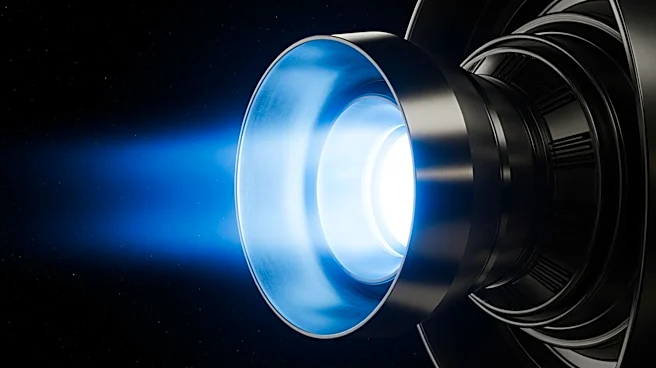
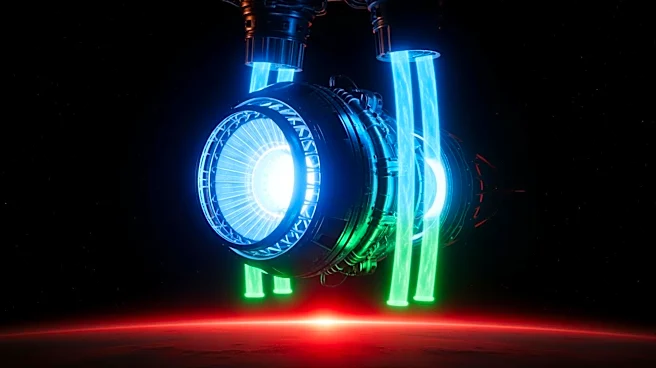
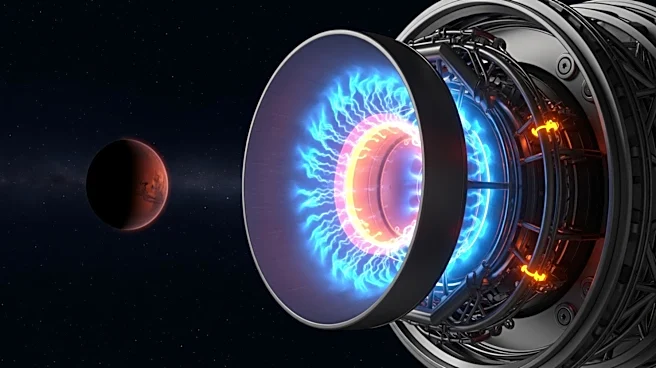
NASA engineers have successfully tested a next-generation electric propulsion system that uses lithium metal vapor as fuel. This new engine achieved a record 120 kilowatts of power, significantly surpassing
previous electric thrusters. The engine is designed to propel spacecraft at high speeds, potentially revolutionizing space travel by reducing fuel consumption by up to 90% compared to chemical rockets. This propulsion system is a key development for future human missions to Mars, which will require substantial power and long-duration operation.
Why It's Important?
The development of this new propulsion system is crucial for the future of space exploration, particularly for human missions to Mars. The ability to travel faster and more efficiently could reduce mission costs and increase the feasibility of long-duration space travel. This technology could also enable more extensive exploration of the solar system, opening new possibilities for scientific discovery and human presence beyond Earth.
What's Next?
NASA plans to continue testing and scaling up the propulsion system to meet the power requirements for a human mission to Mars, estimated at 2 to 4 megawatts. The system must withstand extreme temperatures and operate continuously for extended periods. As testing progresses, NASA will address challenges related to scaling and integration with spacecraft systems, paving the way for future missions to Mars and beyond.