










What's Happening?
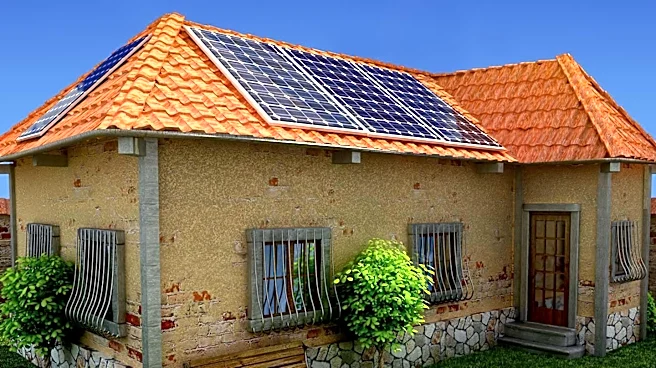
The global market for Building-Integrated Photovoltaic (BIPV) solar modules is poised for significant growth from 2026 to 2035, driven by tightening building energy codes and net-zero construction mandates. BIPV modules, which replace traditional building materials
in roofs, facades, and windows, are expected to grow at a compound annual growth rate of 12-18%. The market expansion is supported by declining costs, increased architectural demand for customized modules, and regulatory pushes from the European Union and the United Kingdom. Asia-Pacific, led by China, remains the dominant production hub, while Europe and North America are increasing local assembly capacity to reduce import dependence.
Why It's Important?
The growth of the BIPV market is significant for the global transition to sustainable energy, as it aligns with decarbonization goals in the building sector. By 2035, over 40 countries are expected to mandate on-site renewable generation for new commercial buildings, expanding the market for BIPV. The integration of BIPV with building lifecycle management and smart systems enhances energy efficiency and self-sufficiency. This shift not only supports environmental goals but also stimulates economic growth by creating demand for new technologies and skilled labor in the renewable energy sector.
What's Next?
The BIPV market is expected to continue its growth trajectory, with residential adoption accelerating as solar roof tiles achieve cost parity with premium roofing materials. Manufacturing capacity for large-format and semi-transparent modules is scaling, particularly in China and Southeast Asia. However, challenges such as fragmented certification standards and supply chain bottlenecks may limit production growth in the near term. Despite these hurdles, the convergence of regulatory support and architectural demand is likely to drive continued market expansion.