






What's Happening?
President Donald Trump has dismissed comments made by Prince Harry during his recent visit to Ukraine, where the Duke of Sussex urged the United States to increase its support for Kyiv. Prince Harry, speaking at the Kyiv Security Forum, emphasized the importance
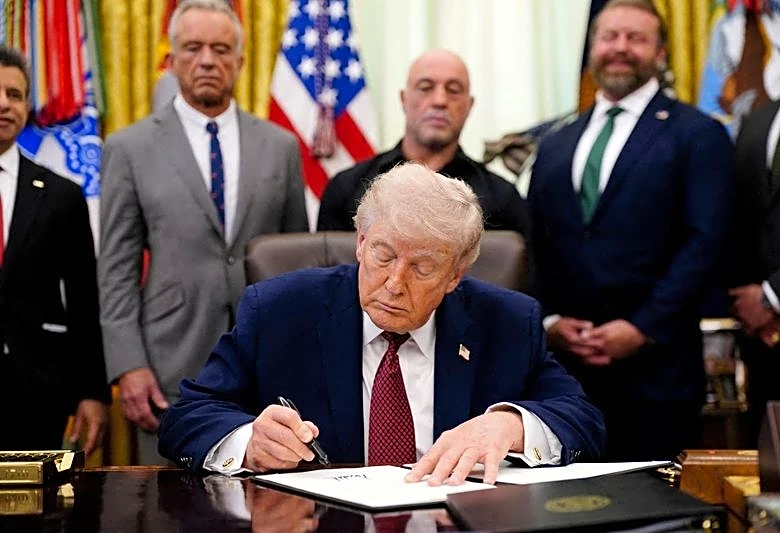
of American leadership in honoring international treaty obligations, particularly in the context of Ukraine's sovereignty. He highlighted the U.S.'s role in ensuring Ukraine's borders are respected, referencing the historical context of Ukraine giving up nuclear weapons with assurances from the U.S. Trump responded by stating that Prince Harry does not speak for the UK and expressed that he believes he represents the UK more than Harry. Despite this, Trump appreciated Harry's advice and inquired about his well-being and that of his wife.
Why It's Important?
The exchange between President Trump and Prince Harry underscores the ongoing international discourse regarding the U.S.'s role in global security, particularly in relation to the conflict in Ukraine. Prince Harry's comments reflect a call for the U.S. to reaffirm its commitments to international agreements, which could influence U.S. foreign policy decisions. Trump's dismissal of Harry's remarks highlights the complexities of diplomatic relations and the differing perspectives on international involvement. This situation also illustrates the influence of public figures like Prince Harry in shaping public opinion and potentially impacting diplomatic relations between the U.S. and the UK.
What's Next?
King Charles III and Queen Camilla are scheduled to visit Washington, D.C., which may provide an opportunity to address any diplomatic tensions and reinforce the UK-U.S. relationship. The visit could also serve as a platform for further discussions on international security and the role of the U.S. in global affairs. Observers will be watching for any statements or agreements that emerge from this visit, particularly in the context of the ongoing conflict in Ukraine and the broader implications for U.S. foreign policy.