



What's Happening?
A preliminary federal investigation by the National Transportation Safety Board (NTSB) indicates that a Kenmore Air pilot reported encountering bad weather shortly before a floatplane crashed near Sucia Island in Washington's San Juan Islands last month.
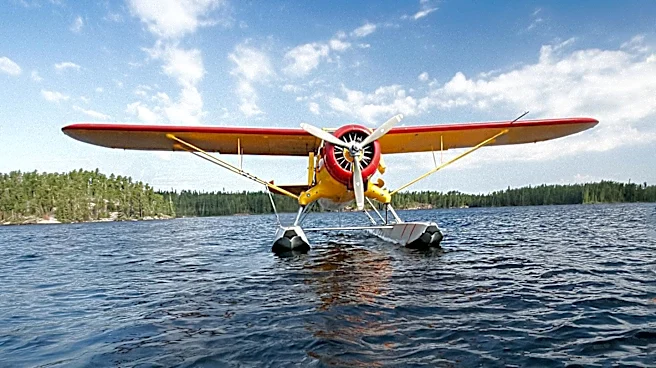
The incident, which occurred on July 23, involved a de Havilland DHC-3 Otter carrying 10 passengers and a pilot. The pilot communicated to Kenmore Air's operations center that inclement weather prevented the flight from continuing to its destination, Roche Harbor, and planned to return to Sucia Island to land and await improved conditions. Witness video shows the plane flying at a low altitude before its left wing dropped, causing the wingtip and left pontoon float to strike the water. The aircraft then hit rocks, leading to a fire that destroyed the fuselage after all 11 occupants were rescued. Two passengers sustained serious injuries, seven had minor injuries, and the pilot also suffered minor injuries. The NTSB's report provides the clearest official account of the crash to date.
Why It's Important?
This incident highlights the critical role of weather conditions in aviation safety, particularly for seaplane operations in geographically complex areas like the San Juan Islands. The NTSB's preliminary findings underscore the challenges pilots face in rapidly changing atmospheric conditions and the importance of real-time decision-making regarding flight continuation or diversion. For the aviation industry, especially air taxi services, this event may prompt a review of weather protocols, pilot training for adverse conditions, and emergency landing procedures. The rapid rescue effort involving civilian boaters, the U.S. Coast Guard, and local emergency agencies demonstrates the effectiveness of community and inter-agency cooperation in maritime accidents. The ongoing investigation will be crucial for identifying any systemic issues or contributing factors that could inform future safety recommendations, potentially impacting operational guidelines for similar air services across the U.S. and ensuring passenger safety.
What's Next?
The NTSB's investigation into the Kenmore Air seaplane crash remains ongoing. The aircraft has been recovered and moved to a secure hangar for further examination, which will be a key step in determining the full sequence of events and contributing factors. Kenmore Air canceled scheduled flights the day after the crash to focus on supporting those affected, and the company will likely cooperate fully with the NTSB's continued inquiry. Future steps will involve detailed analysis of flight data, maintenance records, and pilot interviews, as well as a thorough examination of the wreckage. The final NTSB report, once completed, will provide comprehensive findings and may include safety recommendations aimed at preventing similar incidents. These recommendations could influence regulatory changes, operational procedures for seaplane operators, and pilot training requirements, potentially impacting air travel safety standards in the U.S.
Beyond the Headlines
The Kenmore Air seaplane crash, while tragic, brings to light the inherent risks and unique challenges associated with seaplane travel, particularly in regions known for their natural beauty and variable weather. Beyond the immediate safety concerns, this incident could spark broader discussions about the balance between accessibility to remote or scenic locations via air taxi services and the stringent safety measures required to mitigate risks. The reliance on visual flight rules and the dynamic nature of water landings introduce complexities not always present in traditional airport operations. Furthermore, the incident highlights the psychological impact on passengers and crew, as well as the community, emphasizing the need for robust support systems in the aftermath of such events. The investigation's findings could also contribute to advancements in weather forecasting and communication technologies specifically tailored for low-altitude and seaplane operations, enhancing overall aviation safety in challenging environments.