








What's Happening?
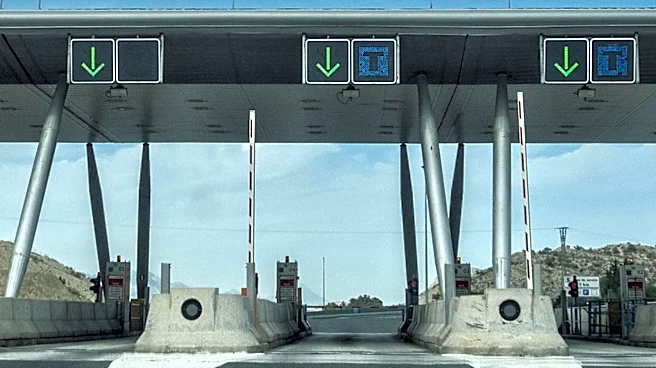
The Pennsylvania Turnpike is in the final stages of converting its tolling system to Open Road Tolling (ORT). This system allows for electronic toll collection at highway speeds without requiring drivers to stop at toll booths. The transition has already
been completed for areas east of the Reading Interchange (Exit 286) and the entire Northeast Extension. The western section of the mainline PA Turnpike is scheduled to launch ORT early next year. This change involves the removal of traditional toll plazas and the reconstruction of interchanges to facilitate unobstructed traffic flow. The PA Turnpike, which is the second-largest tolling facility in the United States by mileage, aims to enhance safety and convenience for its more than 550,000 daily customers through this modernization. The system processes tolls via E-ZPass or Toll By Plate transactions using overhead gantries.
Why It's Important?
The shift to Open Road Tolling on the Pennsylvania Turnpike is a significant infrastructure modernization effort that will impact regional mobility and commerce. By eliminating the need for drivers to stop at toll booths, ORT is expected to reduce traffic congestion, improve travel times, and enhance safety by minimizing lane changes and potential accidents associated with traditional toll plazas. This move aligns with broader national trends in toll road management, aiming for more efficient and seamless travel experiences. For commuters and commercial transporters, the change means a smoother journey, potentially leading to economic benefits through reduced fuel consumption and faster delivery times. The removal of physical toll booths also allows for the reconstruction of interchanges, further optimizing traffic flow and potentially supporting future development in areas adjacent to the turnpike. The increased reliance on electronic payment methods like E-ZPass also encourages greater adoption of these systems, streamlining toll collection processes across the state.
What's Next?
The Pennsylvania Turnpike is set to complete the implementation of Open Road Tolling on the western section of its mainline early next year. Following this, the reconstruction of interchanges, including the removal of toll booths, east of Reading and on the Northeast Extension, is expected to be finalized by the end of this year. Travelers will continue to experience the benefits of the ORT system, such as reduced congestion and improved traffic flow. The PA Turnpike will also continue to promote the use of E-ZPass, which offers cost savings compared to Toll By Plate. Drivers are encouraged to utilize resources like the PA Toll Pay App and the PA Turnpike Toll Calculator to manage their accounts and plan their trips. The Pennsylvania State Police Troop T will maintain increased patrols to ensure compliance with traffic laws, including the recently enforced 'Paul Miller's Law' prohibiting handheld device use while driving.
Beyond the Headlines
The transition to Open Road Tolling on the Pennsylvania Turnpike represents a broader technological and societal shift in how infrastructure is managed and utilized. Beyond the immediate benefits of reduced congestion and improved safety, this move signifies a deeper integration of digital solutions into daily life. The reliance on electronic payment and overhead gantries moves away from human interaction in toll collection, potentially leading to changes in employment within the toll road sector. Furthermore, the data collected from ORT systems can provide valuable insights into traffic patterns and driver behavior, which could inform future urban planning and transportation policy decisions. The emphasis on E-ZPass also highlights the ongoing push towards cashless transactions, raising questions about accessibility for all drivers and potential privacy concerns related to tracking vehicle movements. This modernization also sets a precedent for other states considering similar upgrades to their toll road networks, contributing to a more interconnected and efficient national transportation system.