
What's Happening?
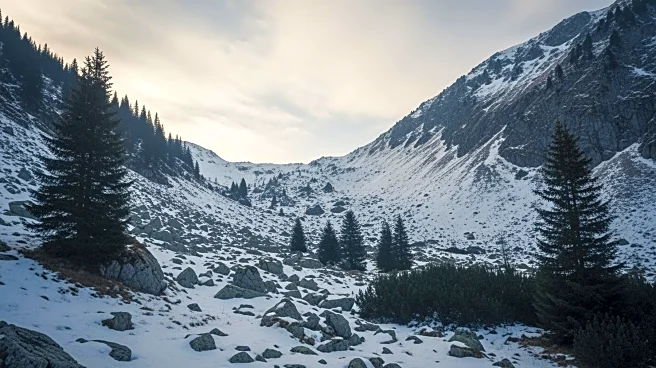
The president of the International Ski Federation (FIS), Johan Eliasch, has expressed concerns regarding the snow levels for the skiing events at the 2026 Winter Olympics in Livigno, Italy. The issue stems
from delays in the Italian government releasing funds necessary for the production of artificial snow. These funds are crucial for creating the halfpipes and jumps required for snowboarding and freestyle skiing events. Despite these concerns, Livigno's mayor, Remo Galli, has assured that the technical problems causing the delays have been resolved. Galli stated that a valve replacement was necessary but completed within the required timeframe, allowing snow guns to operate effectively. He remains confident that the venues will have sufficient snow for the Olympics.
Why It's Important?
The concerns over snow levels at the 2026 Winter Olympics highlight the challenges of hosting large-scale international sporting events in regions dependent on artificial snow. The delay in funding and subsequent production issues could impact the quality and safety of the events, potentially affecting athletes' performances and the overall success of the Olympics. This situation underscores the importance of timely logistical and financial planning in event management. The resolution of these issues is crucial not only for the athletes and organizers but also for Italy's reputation as a host nation, which could influence future bids for international events.
What's Next?
With the technical issues reportedly resolved, the focus will now shift to ensuring that the snow production continues smoothly in the lead-up to the Olympics. The organizers will need to monitor weather conditions closely and adjust their plans as necessary to maintain optimal snow levels. Additionally, the Italian government may face scrutiny over the initial delays, prompting a review of the funding and planning processes for future events. Stakeholders, including athletes, sponsors, and international sports bodies, will be watching closely to see how these challenges are managed.