
What's Happening?
The Cuban government has announced the release of 2,010 prisoners as a 'humanitarian and sovereign gesture,' coinciding with Holy Week. This decision comes amid ongoing pressure from the Trump administration,
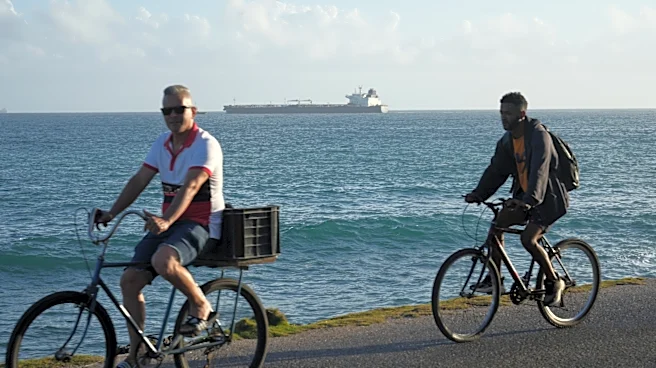
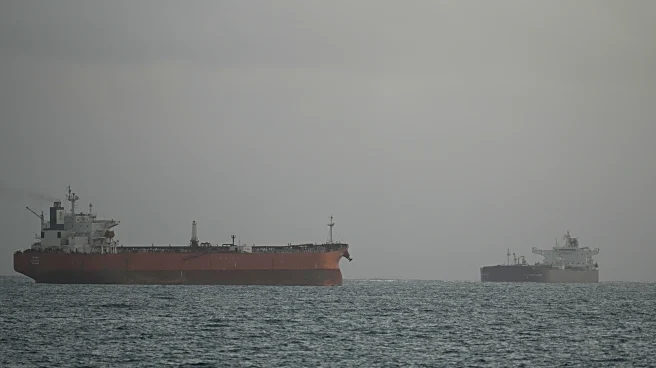
which has imposed a de facto oil blockade on the island, exacerbating Cuba's energy crisis. The release, one of the largest in recent years, was reported in the state-run newspaper Granma. The criteria for the pardon included the nature of the crimes, the prisoners' conduct, the portion of their sentence served, and their health status. The announcement did not specify the exact timing or conditions of the release. This marks the second prisoner release by Cuba this year, following a smaller release of 51 inmates as a goodwill gesture to the Vatican.
Why It's Important?
The release of prisoners is significant as it reflects Cuba's response to mounting international pressure, particularly from the United States. The U.S. has been attempting to isolate Cuba politically and economically, with the oil blockade leading to severe energy shortages and blackouts across the island. The humanitarian gesture could be seen as an attempt by Cuba to alleviate some of the internal and external pressures it faces. The U.S. State Department has acknowledged the release but remains skeptical about the inclusion of political prisoners, urging the release of those detained for political reasons. This development could influence ongoing negotiations between Washington and Havana, potentially impacting future U.S.-Cuba relations.
What's Next?
The future implications of this prisoner release are uncertain. The U.S. may continue to exert pressure on Cuba for further political concessions, while Cuba might use this gesture to seek relief from the economic sanctions. The release could also affect internal Cuban politics, as the government navigates the challenges posed by the energy crisis and international scrutiny. The situation remains fluid, with potential for further diplomatic engagements or escalations depending on the responses from both the U.S. and Cuban governments.
Beyond the Headlines
The broader implications of this event touch on human rights and international diplomacy. The release raises questions about the Cuban government's treatment of political prisoners and its broader human rights record. Human rights organizations have criticized Cuba for arbitrary detentions and poor prison conditions. This move might be an attempt to improve its international image, but it also highlights the ongoing struggle for political freedoms within the country. The situation underscores the complex interplay between humanitarian actions and geopolitical strategies.