



What's Happening?
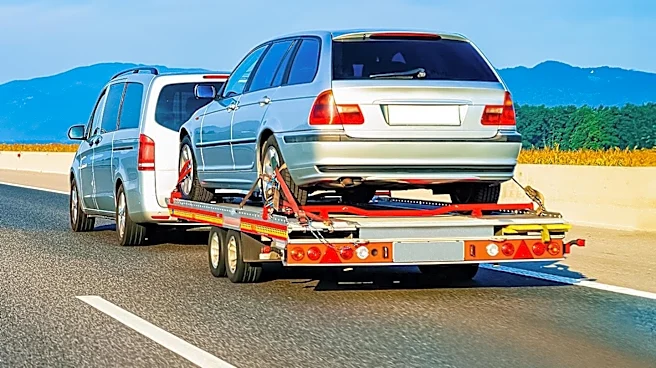
Trace Thompson, a Baltimore resident, is facing thousands of dollars in fines and expenses after his 2020 Subaru Legacy was stolen from Mount Vernon and later recovered. The car was taken on October 17, and despite Thompson's efforts to track it with
the manufacturer's help, it was eventually found by Baltimore County Police on October 30. The driver, Bobby Hamlett, 71, was arrested and charged with unlawful taking and unauthorized removal of a motor vehicle, though he claimed Thompson had given him permission to borrow the car, which Thompson denies. Upon recovery, the vehicle had a damaged rear window, and its interior was described as a 'crime scene' due to trash, drugs, and bodily fluids, costing Thompson $600 for professional cleaning. Additionally, Thompson received notices for unpaid tolls and a $2,398 fine from the Maryland Motor Vehicle Administration (MVA) for lapsed insurance coverage, which he disputes, stating he had continuous coverage.
Why It's Important?
This incident highlights significant challenges faced by victims of vehicle theft in urban areas, extending beyond the initial crime to include substantial financial burdens and bureaucratic hurdles. Thompson's experience underscores a systemic issue where victims are left to bear the costs of damages, cleaning, and unexpected fines, even after their property is recovered. The MVA fine for lapsed insurance, despite Thompson's claim of continuous coverage, points to potential communication gaps or administrative delays between law enforcement, insurance companies, and state agencies. This situation can disproportionately affect individuals, leading to financial distress and a sense of injustice. It also raises questions about the effectiveness of current policies in protecting citizens from the full aftermath of such crimes and the need for clearer protocols to prevent victims from being penalized for circumstances beyond their control.
What's Next?
Thompson is currently working with the MVA to resolve the $2,398 insurance fine, which was reportedly issued in January and re-notified after the car was stolen. He also awaits clarity on whether additional tickets or fines related to the car's unauthorized use will emerge. The alleged thief, Bobby Hamlett, is scheduled to appear in court in December. Thompson has expressed his intent to advocate for city leaders to implement more robust measures to protect residents from vehicle thefts, warning that a lack of action could lead young professionals to leave the city. In the interim, Thompson has resorted to parking his car in a garage nearly a mile from his apartment, incurring additional monthly expenses, to ensure its safety.
Beyond the Headlines
This case delves into the broader societal implications of urban crime and its impact on residents' quality of life and economic stability. The 'crime scene' condition of the recovered vehicle and the subsequent financial penalties illustrate a profound breakdown in the victim's sense of security and trust in public systems. It also touches upon the ethical responsibility of authorities to not only apprehend criminals but also to support victims through the recovery process, minimizing their secondary victimization. The incident could fuel public discourse on urban safety, police response times, and the need for more victim-centric policies. Furthermore, it highlights the potential for such experiences to contribute to urban flight, as residents seek safer environments and more responsive governance, impacting the social and economic fabric of cities like Baltimore.