
What's Happening?
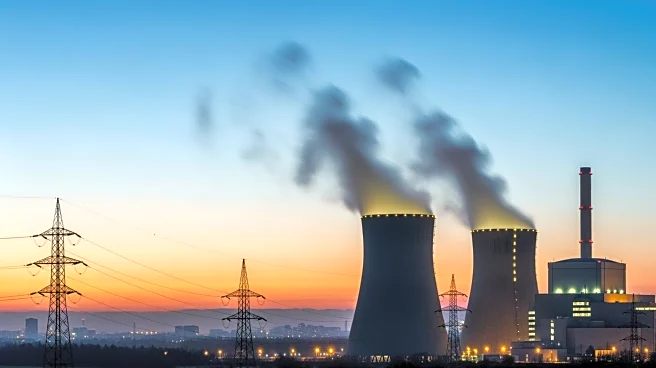
Local government officials in Japan have approved the restart of a reactor at the Kashiwazaki-Kariwa nuclear power plant, the world's largest nuclear facility. This decision comes after a vote of confidence
in Hideyo Hanazumi, the governor of Niigata prefecture, who supports the plant's reopening. The plant, which has been idle since 2012 following the Fukushima disaster, is operated by Tokyo Electric Power Co. (TEPCO). The restart is part of Japan's broader strategy to double its nuclear generation capacity to 20% of the country's energy mix by 2040. Despite local opposition, TEPCO plans to apply to the Japanese Nuclear Regulation Authority to restart the No. 6 reactor, with operations expected to resume around January 20, 2026.
Why It's Important?
The restart of the Kashiwazaki-Kariwa plant is significant for Japan's energy policy and Tokyo's power supply. As Japan aims to increase its reliance on nuclear energy, this move could help reduce the country's carbon emissions and dependence on fossil fuels. For Tokyo, one of the world's most populous cities, the plant's operation is crucial for meeting energy demands. However, the decision also raises concerns about nuclear safety, given the plant's history of security breaches and the Fukushima disaster's legacy. The restart could influence public opinion on nuclear energy and impact Japan's energy policy debates.
What's Next?
TEPCO's application to the Japanese Nuclear Regulation Authority is a critical next step. If approved, the plant's restart could set a precedent for other nuclear facilities in Japan. The government may face increased scrutiny from local communities and environmental groups, potentially leading to legal challenges or protests. Additionally, the international community will likely monitor Japan's nuclear safety measures closely, influencing global nuclear energy policies.
Beyond the Headlines
The restart of the Kashiwazaki-Kariwa plant highlights the ongoing tension between energy needs and safety concerns in Japan. It underscores the ethical and cultural challenges of balancing economic growth with environmental and public safety. The decision may also affect Japan's international relations, particularly with countries advocating for renewable energy and those concerned about nuclear proliferation.