




What's Happening?
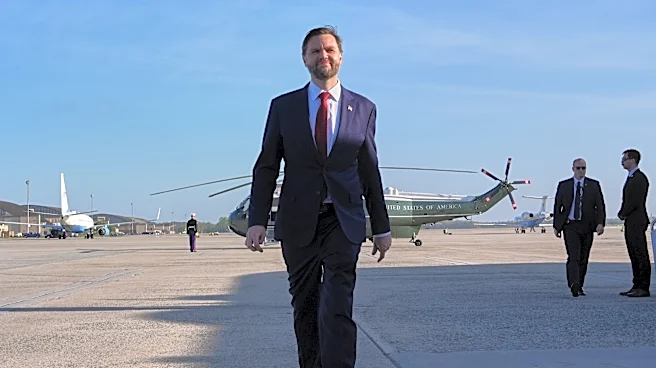
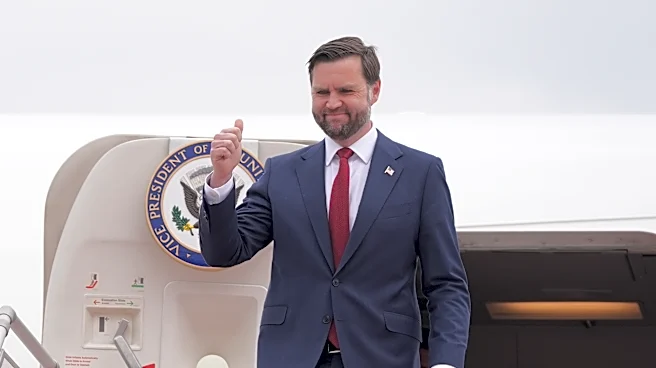
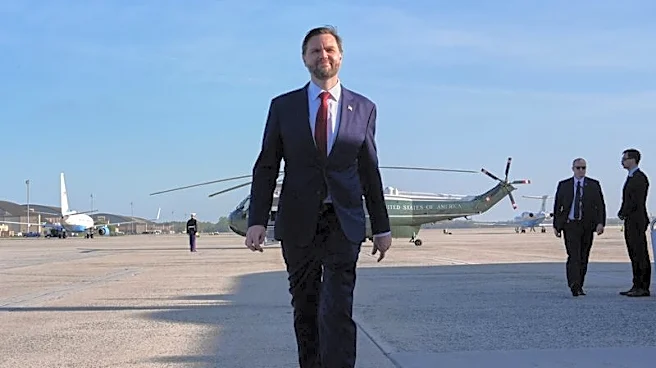
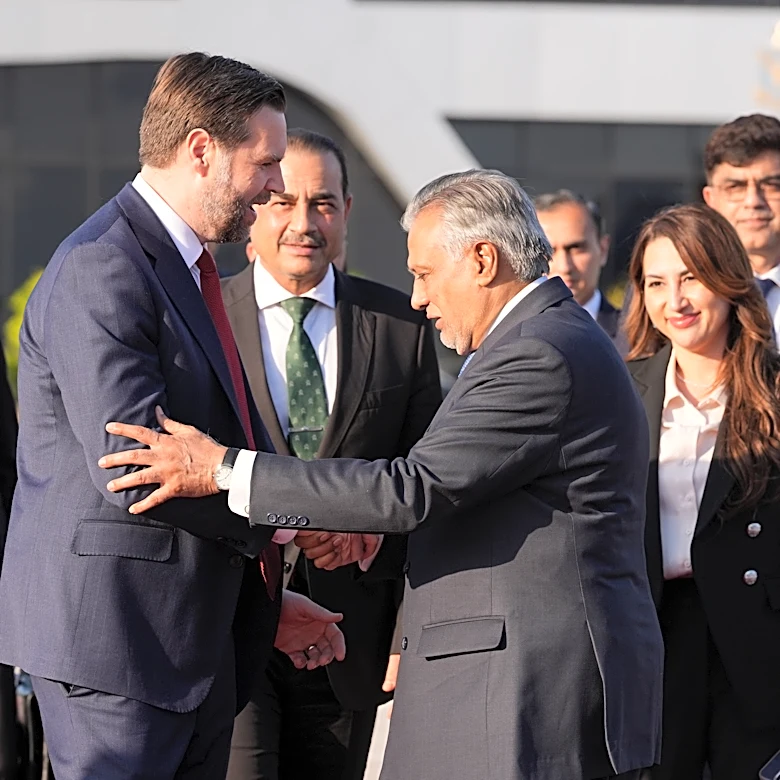
US Vice President JD Vance met with Pakistan Prime Minister Shehbaz Sharif in Islamabad to initiate peace talks aimed at resolving the Middle East conflict. The meeting, held at the Prime Minister House, included key US envoys Steve Witkoff and Jared
Kushner, alongside Pakistan's Foreign Minister Ishaq Dar and Interior Minister Mohsin Naqvi. The talks are part of a broader diplomatic effort to facilitate sustainable peace in the region, with Pakistan playing a mediating role. The format of the discussions between the US and Iranian delegations remains unclear, but historically, indirect talks have been used, with mediators shuttling messages between the parties.
Why It's Important?
The commencement of peace talks between the US and Pakistan signifies a critical diplomatic effort to address ongoing conflicts in the Middle East. The involvement of high-level officials, including Vice President JD Vance, underscores the importance the US places on achieving stability in the region. Successful negotiations could lead to reduced tensions and foster economic and political stability, benefiting not only the involved nations but also global stakeholders. Pakistan's role as a mediator highlights its strategic importance in regional diplomacy, potentially enhancing its international standing and influence.
What's Next?
The next steps in the peace talks will likely involve further meetings and negotiations between the US, Pakistan, and Iranian delegations. The outcome of these discussions could influence future diplomatic strategies and alliances in the Middle East. Stakeholders, including regional governments and international organizations, will be closely monitoring the progress, as successful talks could lead to significant geopolitical shifts. The US may continue to leverage its diplomatic channels to ensure the talks progress towards a peaceful resolution.