
What's Happening?
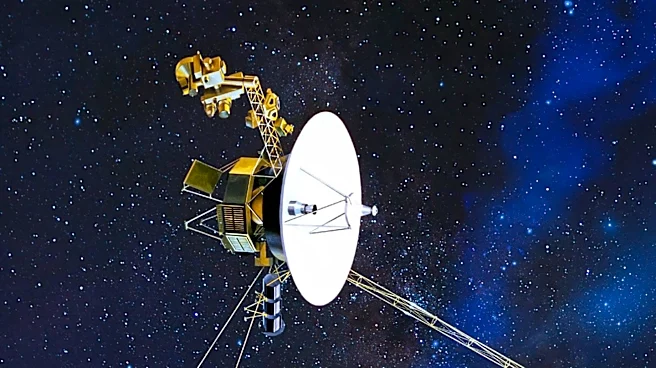
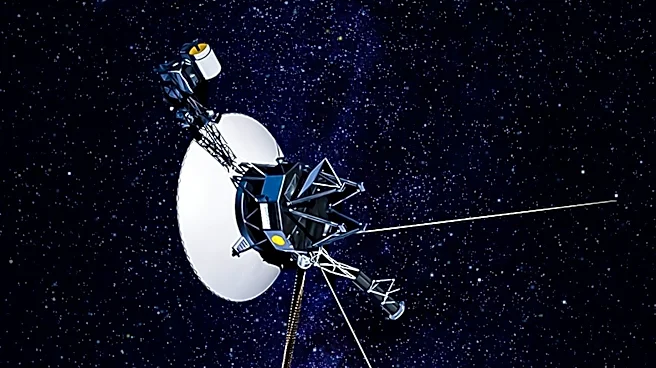
NASA's New Horizons spacecraft has been reactivated after a 321-day hibernation period at the edge of the solar system. According to NASA, the spacecraft is in 'good health' and has begun transmitting
scientific data again. New Horizons, which launched in 2006, is on a mission to study the boundary where the sun's influence ends and interstellar space begins. The spacecraft is currently about 5.9 billion miles from Earth, making it one of the farthest working spacecraft in the universe. It is on a trajectory toward the heliopause, the outer edge of the sun's influence, where it will collect detailed data with its sensitive instruments.
Why It's Important?
The reactivation of New Horizons is significant for space exploration as it continues to provide unprecedented data about the outer reaches of our solar system. The spacecraft's journey offers insights into the heliopause, a boundary that marks the end of the sun's influence and the beginning of interstellar space. This data is crucial for understanding the solar system's structure and the transition to interstellar space. The mission's findings could have implications for future space exploration and our understanding of the universe, potentially benefiting scientific communities and space agencies worldwide.
What's Next?
As New Horizons continues its journey, it will conduct studies of hydrogen in the outer heliosphere and send back data collected during its hibernation. The spacecraft is expected to reach the heliopause, estimated to be about 120 astronomical units from the sun, in the coming years. This will allow it to gather more detailed information about this boundary than previous missions. The data transmission between New Horizons and Earth takes approximately 8 hours and 52 minutes, a delay that will increase as the spacecraft travels further.